
Here's what most distributed systems courses get wrong: they teach you Paxos, they teach you the CAP theorem, and they show you beautiful diagrams of how consensus works in theory. Then, you get to prod and discover that your actual problems have little to do with proving algorithmic correctness.
Your problems look like: the database cluster split during a deployment, and now both halves think they're authoritative. Client retries amplified a data corruption bug across 15 services. A GC pause triggered a false-positive failure detection that cascaded into a full cluster restart.
The gap between "I understand distributed systems theory" and "I can keep distributed systems running" is where most engineers get stuck. You know the problems exist. You've read the papers. But when the pager goes off because network partitions are causing split-brain writes, you need patterns, not proofs.
Martin Fowler's distributed systems patterns catalog provides exactly this practical foundation — the recurring solutions that turn chaotic failure modes into predictable, testable architecture decisions.
After building and debugging distributed systems for years across infrastructure platforms, these are the seven patterns I reach for most often. Not because they're theoretically elegant, but because they prevent the specific disasters that happen in production.
We'll walk through each pattern with the context textbooks skip: the specific failure modes they prevent, the implementation gotchas that cause outages when you get them wrong, and the trade-offs that separate staff-level thinking from senior-level execution.
1. Majority Quorum: How to prevent split-brain without thinking
Split-brain writes are the nightmare scenario in distributed databases. Network partitions split your cluster into two isolated segments. Both segments believe they are authoritative. Both accept writes.
When the partition heals, you have conflicting updates with no clear answer about which ones actually happened and which should be discarded. I've watched teams try to reconcile data after split-brain incidents, manually reviewing thousands of records to determine ground truth.
The Majority Quorum pattern solves this mathematically.
Operations succeed only after acknowledgment from a strict majority (floor(N/2) + 1 replicas) of the cluster. Because no two disjoint majorities can exist simultaneously (basic set theory), the system guarantees a single source of truth even during network failures.
It's beautiful in its simplicity: the majority wins, the minority waits or fails, no ambiguity.
With five replicas, writes require three acknowledgments.
You can lose two nodes without compromising any committed data because the remaining three nodes hold all successful writes. The math protects you automatically — there's no way for two segments to both have a majority, so there's no way for them to both accept conflicting writes.
What production taught me about Quorums
The theory is straightforward. The practice has sharp edges. Every operation waits on the slowest node in the majority set, which means your P95 write latency is determined by your third-slowest replica.
If one of those replicas is experiencing network congestion, garbage collection pauses, or disk saturation, every write blocks until it responds or times out.
I learned this the hard way while running a five-node cluster across three availability zones. Two nodes were in us-east-1a, two in us-east-1b, and one in us-east-1c. Most writes completed in under 10ms when all zones were healthy.
But during a brownout in 1c (the single-node zone), writes started timing out because we couldn't reach quorum; we'd get two fast responses from 1a and 1b, but the third node in 1c was unreachable.
The system correctly prevented split-brain, but it also made the entire cluster unavailable for writes even though four healthy nodes were present.
The right approach
The fix involved tuning our quorum topology to prefer local zones during regular operation and only expand to remote zones during failures. Dynamic quorum sizing keeps the pattern practical at scale — shrinking to regional fast-paths when inter-datacenter latency spikes, expanding during maintenance windows, publishing real-time quorum health metrics.
Another gotcha: requiring acknowledgment from too many nodes throttles write throughput without meaningfully improving durability. I've seen teams configure four-of-five quorums, thinking "more replicas means more safety," but that just means you can only tolerate one node failure instead of two.
The math is straightforward: the majority is ceiling(N/2)+1, not "as many as possible."
Modern distributed databases like etcd and CockroachDB embed this pattern beneath their consensus layers, handling all the complexity while exposing simple read-write interfaces.
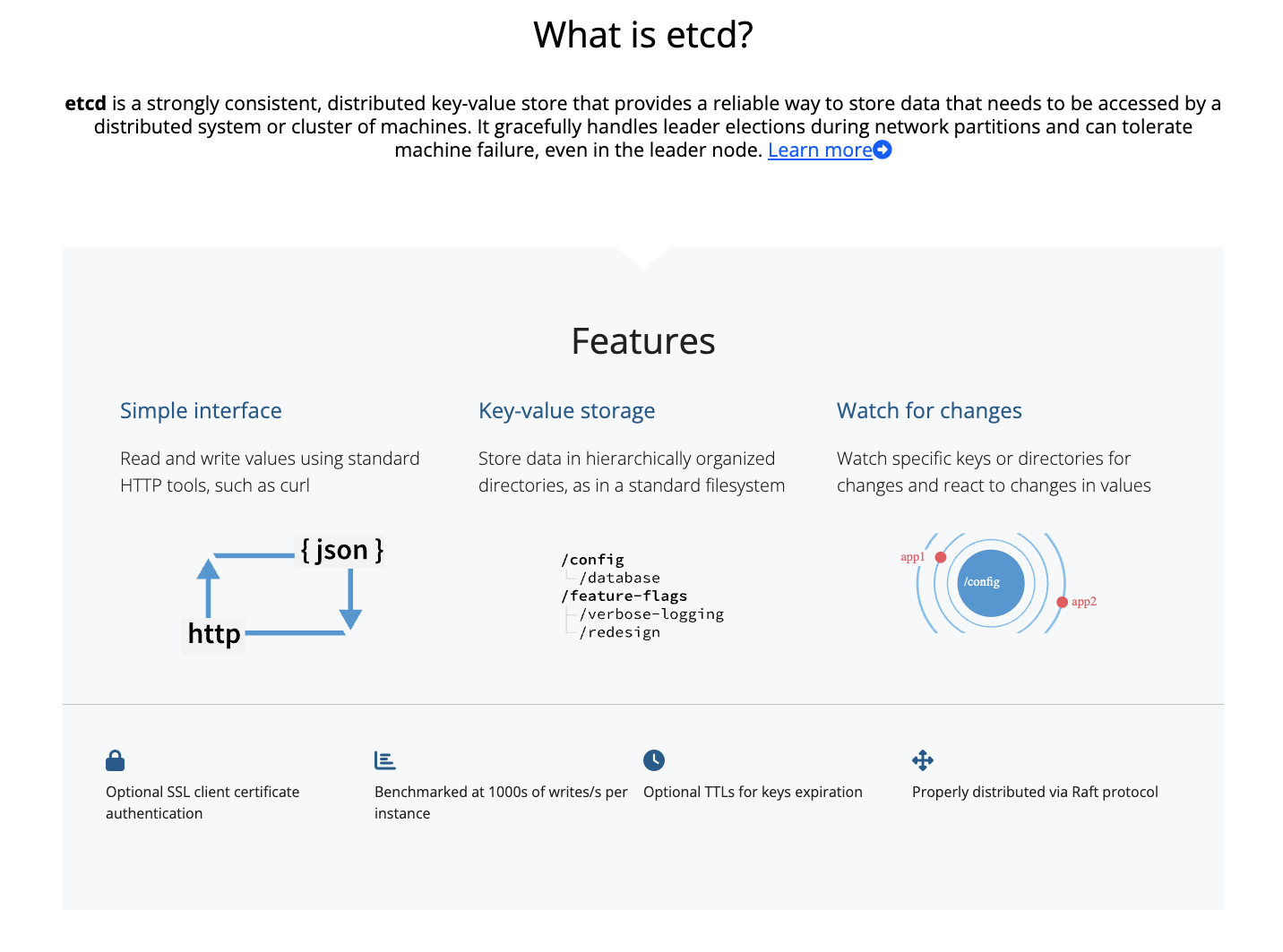
You get the safety guarantees without thinking about quorum mathematics every time you write a transaction.
2. Replicated Log: the single source of truth
Multiple leaders accepting writes simultaneously creates an impossible reconciliation problem. You end up with duplicate records, data corruption, and a conflicting state that you can't merge after the fact.
Distributed systems need deterministic ordering — a guarantee that every node processes changes in the same sequence, regardless of when they arrive or which path they take through the network.
The Replicated Log pattern provides this determinism by treating all modifications as entries in an ordered, append-only sequence. Each write receives a monotonically increasing index and term identifier before being streamed to followers.
The log becomes an audit trail that eliminates ambiguity about operation sequence — if operation 47 comes before operation 48 in the log, every replica processes them in that order, period.
This matters more than you'd think.
I once debugged a production incident involving non-deterministic ordering in a distributed cache. Two writes to the same key arrived at different replicas in different orders. Some nodes had value A, others had value B, and the cache was returning inconsistent results depending on which replica answered the query.
Users were seeing flickering data. Refresh the page, get different results. The bug persisted for three days before we traced it to the lack of a replicated log providing global ordering.
How it works
New leaders advertise both their term number and the highest known log index when they get elected. Followers use this information to reject stale proposals and identify missing entries. The term acts as an epoch marker. It increments whenever leadership changes, allowing nodes to detect when they're talking to an outdated leader.
The index tracks sequential position within a term. Together, the index and term prevent log divergence during elections. If a candidate claims to have term 5, index 847, but a follower has term 5, index 900, the follower knows the candidate is missing operations and rejects the election.
This forces the cluster to elect a leader with a complete log, preventing data loss.
The operational challenge is dealing with unbounded log growth. You can't keep every operation forever; eventually, you'll run out of disk space. This requires periodic compaction through snapshotting, where you preserve the current state without retaining every historical operation.
But snapshotting introduces complexity: what happens if a node crashes during snapshot creation? How do you handle followers that are so far behind they need operations you've already compacted?
Where it goes wrong
Network partitions can create isolated leaders that accept conflicting writes before discovering each other. When connectivity is restored, you need reconciliation logic to handle the divergent logs.
Most implementations pick one leader's log as authoritative and discard the other leader's writes, which is safe but results in some operations being lost. This is why it's critical to prevent partitions from electing multiple leaders in the first place. Use a majority quorum for leadership, not simple majority voting.
Storage exhaustion from unbounded logs is another common failure mode. I've seen production systems fill disk, crash the database, and require manual intervention to recover. The fix requires careful truncation policies that preserve all committed state while discarding superseded operations.
Most implementations use high and low watermarks. Compact everything below the low watermark, keep everything above the high watermark, and make policy decisions about the middle range.
Slow follower catch-up creates operational headaches, too. If a follower falls too far behind, it may never synchronize because the leader has already compacted away the missing operations.
At that point, you either need a complete state transfer (expensive, slow) or permanent removal from the cluster (reduces fault tolerance). Production systems implement leader back-pressure to prevent this — pause new writes until stragglers reach acceptable lag thresholds.
The Raft consensus algorithm powers distributed systems like HashiCorp Consul and etcd using this exact pattern. Apache Kafka replicates partition logs across brokers to guarantee ordered message delivery even during hardware failures. This pattern is how real systems maintain consistency at scale.
3. Lease: Time-bounded ownership without deadlocks
Traditional distributed locks that never expire create cascading unavailability. A process acquires a lock, crashes without releasing it, and all other processes wait indefinitely. The system can't distinguish between a slow holder and a failed one, so waiting processes just queue up forever.
I've debugged incidents where a single crashed process holding a lock brought down an entire service cluster because every other instance was blocked waiting for that lock to release.
The Lease pattern eliminates this ambiguity by combining exclusive access with automatic expiration. Every lease grants time-bounded control. If the holder fails to renew before the timeout, the system reclaims the resource automatically and grants it to the next requester.
The failure case becomes explicit and bounded: worst-case, you wait for the lease timeout, then you're guaranteed to make progress.
The critical implementation detail is selecting appropriate timeouts. Too short and you get false positives during garbage collection pauses or brief network hiccups — the holder is still alive, just temporarily unresponsive, and you've incorrectly revoked their lease.
Too long, and you wait unnecessarily when processes actually fail. The sweet spot I've found across multiple systems: three to five times the expected round-trip time. This provides a safety margin without excessive delay.
The clock problem
Here's the gotcha that bites everyone: system clocks can jump backward during NTP synchronization. Your lease thinks it has 30 seconds remaining. NTP corrects for clock skew, and suddenly you're 10 seconds behind. Your lease just expired without warning, and the system granted it to another process while you're still actively using the resource.
The fix is monotonic time sources. These are clocks that guarantee each reading appears after the previous one, even during NTP corrections. Most languages provide monotonic clock APIs specifically for this use case. Use them. I've spent hours debugging "impossible" lease violations that turned out to be clock jumps.
The risk of counter overflow
Counter overflow is another subtle risk for long-lived systems. If you're tracking leases with 32-bit counters, you'll exhaust the range in a few years of continuous operation. Use 64-bit counters. The marginal memory cost is trivial compared to the operational nightmare of handling overflow.
Garbage collection pauses are the worst offender for false expiration. Languages like Java or Go can suspend your entire process for seconds during major GC cycles. Your lease times out through no fault of your own. You're not crashed, not slow, just paused.
The lease system doesn't know the difference. You wake up from GC to discover someone else owns your resource, and your write just corrupted the shared state.
The mitigation is making your critical paths idempotent, so retries are safe. Use upserts instead of inserts. Make side effects replay-safe. Implement deduplication. When expired leases cause retries to cascade through the system, idempotency prevents those retries from corrupting state.
ZooKeeper demonstrates this pattern through session management. Clients can maintain sessions via periodic heartbeats. Sessions typically expire between 1 and 40 seconds, depending on configuration.
When sessions die, ephemeral nodes automatically disappear, triggering leader re-election without requiring explicit cleanup. The pattern handles both clean failures (process exits) and dirty failures (network partitions) uniformly through timeout-based reclamation.
4. Gossip Dissemination: Coordination without coordinators
Centralized health monitors become dangerous single points of failure as clusters scale. A coordinator tracking every node's status creates a bottleneck that can fail precisely when you need it most — during the coordinator's own outage. You end up blind to cluster state exactly when network issues are causing the problems you're trying to detect.
Gossip Dissemination eliminates this fragility through autonomous, peer-to-peer state propagation. Instead of reporting to a central authority, each node periodically shares its view with a handful of random peers, who forward it to their peers in successive rounds.
Information spreads like an epidemic through a population. Start with one infected node, and within logarithmic time, the entire cluster knows.
The mathematics works out beautifully.
With appropriate fan-out (typically three to five peers per round), information reaches all nodes in O(log N) gossip rounds. A thousand-node cluster achieves full propagation in roughly ten rounds. Ten thousand nodes? About thirteen rounds.
The pattern scales to cluster sizes that would overwhelm any centralized coordinator.
When gossip becomes a problem
The challenge is managing message storms during high churn. Nodes joining and leaving frequently trigger waves of state updates that propagate through the gossip network. Without rate limiting, you can saturate network capacity with gossip traffic, ironically creating the outages you're trying to detect.
I saw this firsthand during a Kubernetes cluster upgrade, where we rotated nodes in batches. Each node shutdown triggered gossip updates about membership changes. With 500 nodes gossiping about constant churn, we consumed 40% of the available network bandwidth just sharing cluster state.
Application traffic suffered. The solution involved implementing per-node rate limits and randomized delays to spread the gossip load over time instead of spiking it all at once.
Bloom filters help tremendously here. Instead of sending the complete state every round (wasteful), nodes exchange probabilistic digests identifying which updates each peer actually needs.
The false-positive rate is tunable: accept a 1% chance of missing an update in exchange for a 90% reduction in bandwidth, or tune it differently based on your tolerance for eventual consistency.
Malicious or buggy nodes risk
The other risk is malicious or buggy nodes injecting false information. Because gossip spreads anything it receives, bad data propagates just as effectively as good data. Without verification, one confused node can poison the entire cluster's view.
Cryptographic signatures on state updates solve this, as nodes only propagate information they can verify came from a trusted source.
Tuning the propagation parameters requires understanding the trade-off between convergence speed and network overhead. Higher fan-out means faster propagation but more bandwidth consumption.
Shorter gossip intervals reduce latency but increase traffic. Most production systems settle on three to five fan-out with one-second intervals, providing good balance for typical cluster sizes and network conditions.
Apache Cassandra uses gossip protocols to maintain distributed state across thousands of nodes, tracking membership, load, and schema changes.
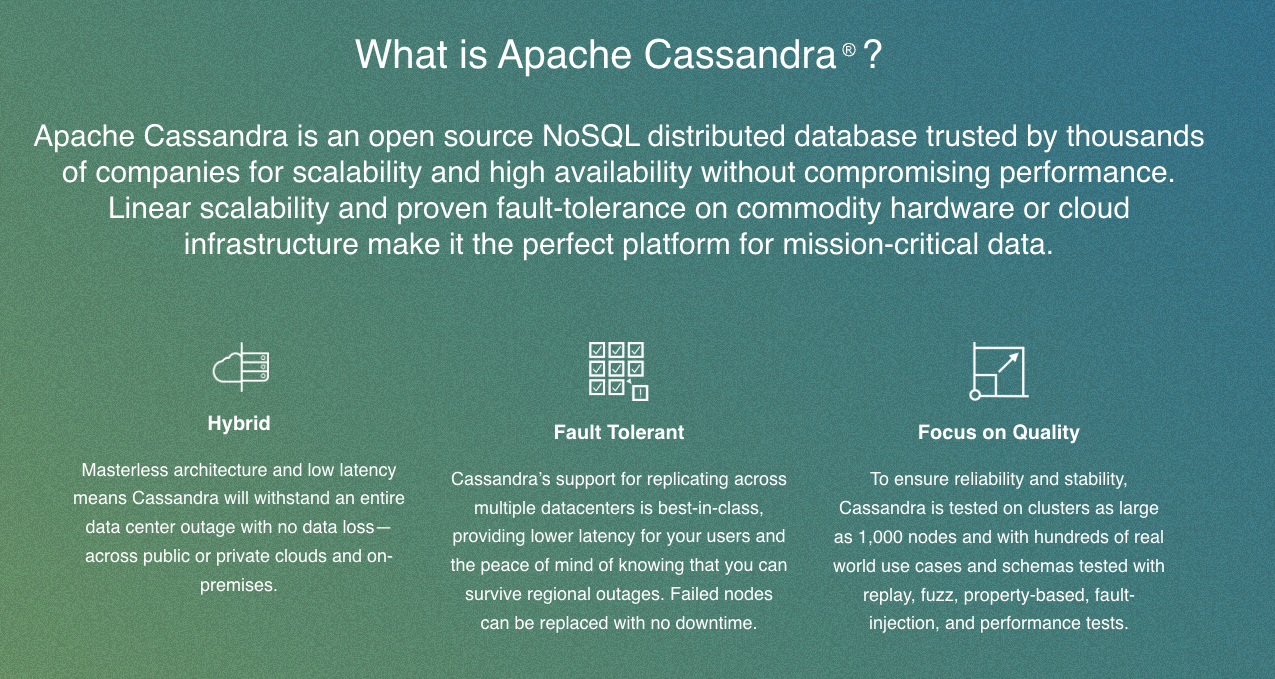
The pattern keeps cluster knowledge eventually consistent without any coordinator bottleneck.
5. Hybrid Clock: Wall time meets causality
Lamport clocks and vector clocks provide mathematically sound causal ordering but sacrifice human-readable timestamps. This creates real problems when audit teams demand wall-clock semantics for regulatory compliance.
You can't answer questions like "show me all transactions between 2 PM and 3 PM yesterday" using pure logical clocks because they have no relationship to actual time.
The Hybrid Clock pattern bridges this gap by combining physical timestamps with logical counters. You get both audit-friendly time values and provably correct event ordering. Each event carries a tuple of physical time (the machine's current clock reading) and a logical counter (incremented when physical times collide).
During message exchanges, nodes update their local clocks to the maximum of local and received tuples, incrementing the logical component when physical times match. This maintains happens-before relationships while providing timestamps that align with wall-clock expectations.
The audit logs show real times. The system retains causal ordering. Everyone wins.
The operational gotchas
NTP drift is the primary failure mode. If your clocks diverge significantly from actual time, you violate ordering assumptions. I've debugged incidents where servers with drifting clocks created timestamps that appeared to be from the future, causing dependent systems to reject them as invalid.
The fix requires setting drift bounds well above typical round-trip latencies and actively monitoring clock skew.
Counter overflow becomes a risk during extended network partitions.
If two nodes can't communicate for weeks while both continue processing operations, they might exhaust their logical counter ranges. Allocating generous bit space (16 to 64 bits) prevents this failure mode in practice, but it's something you need to consider during system design.
Leap seconds are rare but disruptive. When global time authorities insert or remove seconds to account for Earth's rotation, some implementations handle it by causing wall-clock time to regress. Your hybrid clock may produce timestamps that violate monotonicity.
Monotonic clock APIs at the operating system level protect against this, but you need to use them explicitly.
A better approach: Google Spanner's TrueTime
Google Spanner's TrueTime takes hybrid clocks further by transforming uncertainty into explicit intervals. Instead of pretending timestamps are perfectly accurate, TrueTime provides confidence bounds, for example, this event happened between 3:00:00.100 and 3:00:00.102 PM.
The system can then reason about whether intervals overlap (events might be concurrent) or are disjoint (definite ordering exists). This enables globally consistent, timestamped transactions without sacrificing performance through serial bottlenecks.
The trade-off Spanner makes (using GPS and atomic clocks to tighten the uncertainty intervals) works because they can afford specialized hardware. For the rest of us, hybrid clocks using NTP synchronization provide similar benefits at much lower cost, accepting slightly looser guarantees in exchange for not requiring atomic clocks in every datacenter.
6. Idempotent Receiver: safe retries by design
Network unreliability guarantees message retransmission. TCP retries. Application-level retries. Client SDK retries. At every layer, the protocol assumes messages might be lost and compensates by sending duplicates.
But downstream services that process duplicate messages create dangerous side effects. These are double charges on credit cards, duplicate database records, and cascading data inconsistencies that spread across dependent systems.
The Idempotent Receiver pattern makes consumers safe by design. Processing the same message multiple times produces identical system states regardless of the number of retries. The second, third, and hundredth execution of an operation have the same effect as the first.
Every command includes a unique idempotency key that consumers check before processing. If the key has been seen before, the consumer returns the cached result from the first execution without re-running any business logic. This transforms inevitable network retries from costly duplicate transactions into harmless no-ops.
Implementation reality
The challenge is managing deduplication windows. Caches that never expire consume unbounded memory as keys accumulate over time. But premature expiration reopens the duplicate-processing vulnerability. If you evict a key before all retries complete, a late retry will process as if it were new.
Setting appropriate TTL policies requires understanding your retry behavior. Most HTTP clients retry every few minutes, not every few hours. Setting a one-hour deduplication window covers 99.9% of retries while keeping memory usage bounded.
For systems with longer retry windows, you need persistent storage for keys with write-ahead logging to survive consumer crashes.
Key generation responsibility matters more than you'd think. Clients must generate keys to maintain control during retries. If servers generate keys, clients can't include them in retry requests, and the pattern breaks.
I've seen teams implement idempotency using server-generated IDs, then wonder why they still get duplicates — the client retries with a different request that gets a different server-generated key.
Using UUIDs
UUIDs or timestamp-based keys with random suffixes prevent accidental collision across concurrent operations. The collision risk with UUIDs is so vanishingly small (you'd need to generate billions per second for decades) that you can safely ignore it in practice.
Database operations with upsert semantics provide additional protection against race conditions. Instead of checking for duplicates and then inserting conditionally, use INSERT ON CONFLICT UPDATE or MERGE statements that handle the entire operation atomically. This prevents the race where two threads both check, see no duplicate, and then both insert.
The combination of durable idempotency tracking, reasonable TTL policies, and side-effect-free business logic transforms inevitable network retries into architectural non-issues. Your payment processing becomes safe to retry. Your message handling becomes safe to retry.
Your entire distributed system becomes robust against the network failures that are guaranteed to occur.
7. Heartbeat: failure detection that adapts
Distinguishing crashed nodes from network congestion determines whether you trigger failover procedures or wait for connectivity to restore. Premature failover wastes resources and risks split-brain scenarios. Delayed detection extends outages and violates availability SLAs.
You need accurate, adaptive failure detection that responds to actual system behavior rather than static thresholds.
The Heartbeat pattern measures both reachability and latency by periodically sending liveness probes between peers. Instead of binary alive-or-dead decisions, you get quantitative data enabling nuanced recovery choices. The system adapts detection sensitivity based on historical patterns, maintaining responsiveness without excessive false alarms.
Short probe intervals (sub-second) improve failure detection speed but increase network overhead. More extended periods (five to ten seconds) reduce chatter at the cost of delayed recovery.
The right choice depends on your availability requirements and the amount of network bandwidth you can afford to allocate to health checks.
The false-positive problem
Aggressive timeouts trigger false positives during routine operations. I've repeatedly seen Kubernetes clusters evict healthy pods when garbage collection pauses, leading to heartbeat responses exceeding the timeout threshold.
The pod wasn't dead; it was just temporarily suspended, but the controller didn't know the difference.
Result: unnecessary pod churn, service disruption, and wasted compute spinning up replacement instances.
A fixing approach
The fix involves distinguishing different pause types.
Brief network blips should trigger warnings, not immediate failover. Extended pauses might indicate real failure. Multi-level health states (healthy, suspect, failed) enable more nuanced responses than binary decisions.
Phi-accrual suspicion scores go further by dynamically adjusting thresholds based on historical latency patterns, automatically adapting to your specific network and system characteristics.
Randomized jitter in heartbeat timing prevents coordinated failures. If all nodes send heartbeats simultaneously, you create traffic spikes that might overwhelm network capacity or trigger rate limiters. Adding random delays (typically 10-20% of the interval) smooths the load and prevents synchronized behavior from amplifying individual failures.
Gradual health degradation beats binary state transitions. Instead of immediately marking a node as failed after a single missed heartbeat, increment a suspicion counter. Decrement it when heartbeats arrive on time.
Only trigger failover when the counter exceeds a threshold. This filters transient glitches while remaining sensitive to sustained failures.
The Kubernetes node controller demonstrates production-hardened heartbeat implementation using lease objects. Kubelets renew them every ten seconds by default. The controller monitors node health every five seconds.
A node gets marked unreachable after failing to renew its lease for 40 seconds (the default node-monitor-grace-period). Pods then evict based on their configured tolerations (default 300 seconds for not-ready and unreachable taints), preventing thrashing during routine maintenance or transient network issues.
Contribute to AGI development at DataAnnotation
The distributed systems thinking that helps you debug production code and systems is the same thinking that shapes frontier AI models. At DataAnnotation, we operate one of the world's largest AI training marketplaces, connecting exceptional thinkers with the critical work of teaching models to reason rather than memorize.
If your background includes technical expertise, domain knowledge, or the critical thinking to evaluate complex trade-offs, AI training at DataAnnotation positions you at the frontier of AGI development.
Our coding projects start at $40+ per hour, with compensation reflecting the judgment required. Your evaluation judgments on code quality, algorithmic elegance, and edge case handling directly influence whether training runs advance model reasoning or optimize for the wrong objectives.
Over 100,000 remote workers have contributed to this infrastructure.
If you want in, getting from interested to earning takes five straightforward steps:
- Visit the DataAnnotation application page and click "Apply"
- Fill out the brief form with your background and availability
- Complete the Starter Assessment, which tests your critical thinking and coding skills
- Check your inbox for the approval decision (typically within a few days)
- Log in to your dashboard, choose your first project, and start earning
No signup fees. DataAnnotation stays selective to maintain quality standards. You can only take the Starter Assessment once, so read the instructions carefully and review before submitting.
Apply to DataAnnotation if you understand why quality beats volume in advancing frontier AI — and you have the expertise to contribute.
.jpeg)