
The market for part-time coding work is structurally broken in ways that reward the wrong things. Most vetting processes screen for availability rather than capability. Rate structures favor whoever bids lowest, not whoever delivers best.
We spent some time testing the major platforms, tracking actual time investments and earnings, and analyzing why some models work while most don't. We interviewed coders at various career stages to understand the operational realities behind the marketing promises.
What we found was counterintuitive. The opportunities nobody talks about sometimes pay the most. And late-career developers, whose judgment should command premium rates, usually found their decades of experience valued no differently than two years of tutorial completion.
The structural reasons behind these outcomes reveal which platforms actually serve technical professionals and which just extract value from them.
In this guide, we list out the best vetted platforms for part-time coding jobs. If you’re hunting for legitimate remote part-time coding opportunities that reward your technical expertise, keep reading.
Best sites for part-time coding jobs at a glance
Not all platforms solve the same problem. Some optimize for speed, others for rates, others for stability.
Here's what each of the seven platforms actually delivers:
Each platform solves a different challenge in part-time coding work. The detailed reviews below help you choose the right fit for your skills and schedule.
1. DataAnnotation
Most platforms pay you to win clients. At DataAnnotation, we pay you to evaluate code. That single structural difference explains why the economics work so differently from traditional platforms.
What AI training involves
When companies build AI systems like ChatGPT, Claude, or Gemini, they need humans who can assess whether generated code handles edge cases correctly and whether responses demonstrate genuine understanding versus surface-level pattern matching.
At DataAnnotation, AI training isn't data entry or simple classification. The work requires the same judgment you apply to code review: spotting what's missing in superficially correct answers, understanding why one solution creates technical debt while another doesn't, and evaluating trade-offs that automated checks can't detect.
You'll thrive here if you have strong analytical skills, are comfortable with Python or JavaScript, can debug JSON efficiently, and write clear English explanations.
Our operational reality managing 100K+ AI trainers
After years of operating this platform with over 100,000 workers, we've paid out well over $20 million. Certain patterns became clear along the way:
Credentials don't predict performance: We've seen MIT computer science graduates produce mediocre code evaluations because their training emphasized theory over craft. We've seen self-taught developers who've debugged thousands of production issues spot errors that credential-holders miss.
Expertise requirements increase as models improve: Early AI labeling work got commoditized as tasks simplified. But frontier models tackling complex problems require sophisticated evaluation. Teaching GPT-5 demands better judgment than teaching GPT-3, not just more volume. The quality ceiling rises with model capability.
The mission matters: Human intelligence is not a computation. It's a contradiction that coheres: the developer who spots the bug that passed every test, the architect who sees catastrophic load in a diagram that looks fine, the debugger who follows intuition into code they've never read.
How the economics differ
Coding projects start at $40 per hour, with opportunities for higher rates based on demonstrated performance. There's no bidding, no proposals, no client negotiation. You pass a Starter Assessment that tests actual capability (critical thinking, attention to detail, domain knowledge), and then choose projects from a dashboard whenever your schedule allows.
Your rate reflects demonstrated skill, not your ability to write persuasive proposals or undercut competitors. The Coding assessment takes one to two hours. Pass, and you're working. No weeks of vetting, no relationship-building required.
DataAnnotation maintains a 3.7/5 rating on Indeed, with over 700 reviews, and a 3.9/5 rating on Glassdoor, with over 300 reviews. Workers consistently mention reliable payments and genuine schedule flexibility.
DataAnnotation pros:
- Premium pay rates: Coding projects start at $40 per hour, with opportunities for higher rates based on firm performance.
- Fast onboarding: The Starter Assessment unlocks immediate project access without bidding wars or client pitches.
- Schedule autonomy: Choose when you work based on your energy and calendar, not platform availability scores.
- Projects matched to your skills: The qualification system connects you with coding projects that match your actual expertise level.
DataAnnotation cons:
- Task-based payment structure: You're paid per completed project rather than receiving a salary, so your income fluctuates based on how much you work and project complexity.
- Learning curve for specialized tiers: Higher-paying STEM and Coding projects demand domain expertise and genuine critical thinking ability.
Best for: Coders who value craft over credentials, want flexibility without client acquisition overhead, and care about meaningful technical work that advances AI capabilities. Particularly well-suited for late-career developers seeking intellectual engagement without full-time commitment.
2. Lemon.io
Lemon.io eliminates proposal writing by handling client acquisition for you. Pass the vetting flow (a brief video chat, a technical interview covering your preferred stack, and a small paid test project), and client outreach disappears from your to-do list.
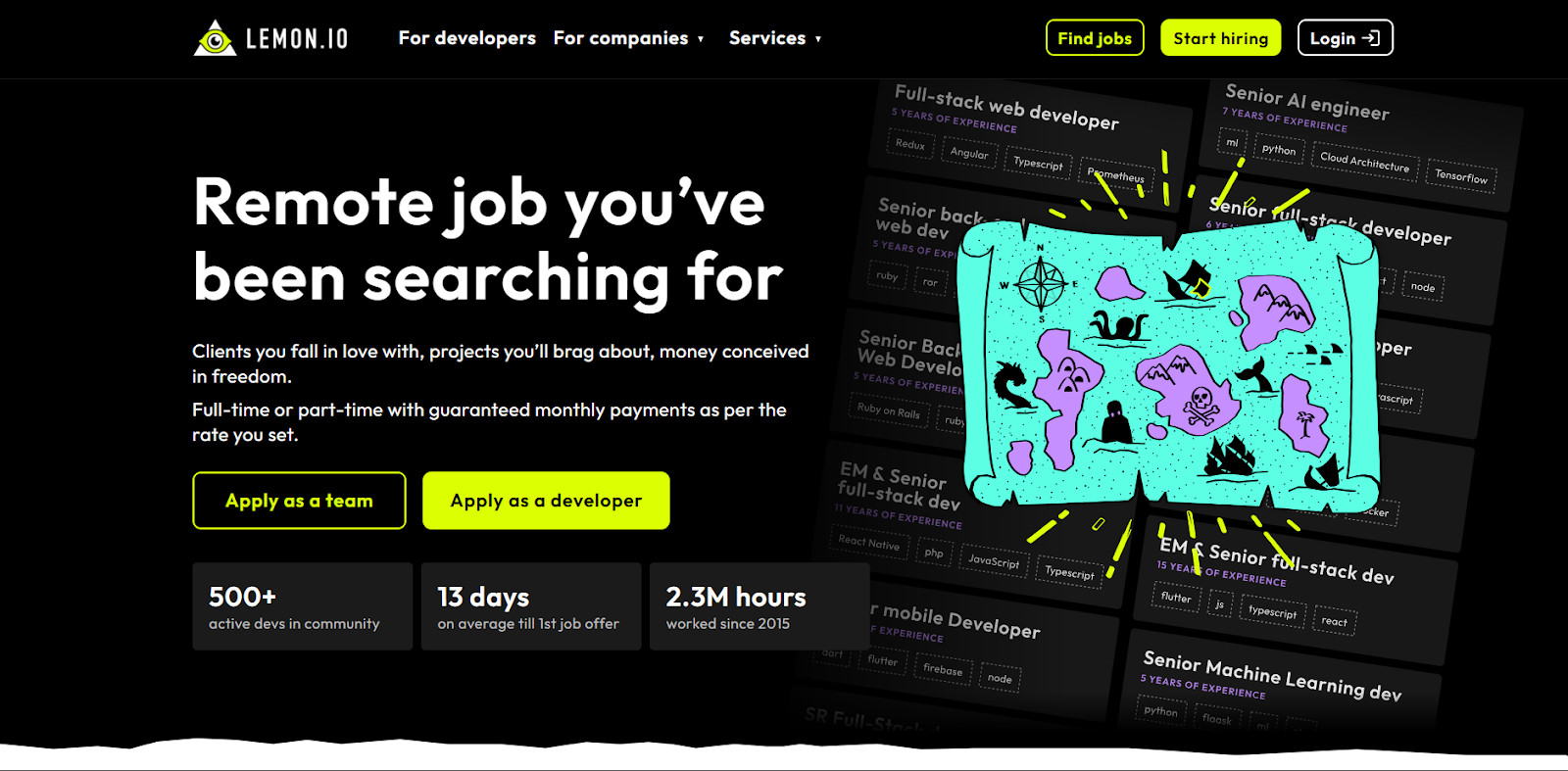
Rather than sending cold pitches and waiting for replies, Lemon.io pre-screens both developers and startups, then introduces matches directly. Hourly rate depends on skill level and expertise. Matching typically happens within 24-48 hours of completing vetting.
Developers see offers matching their primary skills: JavaScript with React, Ruby backends, Python APIs, and Go microservices. The startup focus means building interesting products with teams that move fast and value shipping over process.
Lemon.io pros:
- Client matching handled for you: Platform sources and vets clients, eliminating proposal writing and cold pitching.
- Fast turnaround: Complete vetting and receive your first client match within days, not weeks.
- Startup-focused clients: Work with early-stage companies building interesting products rather than enterprise bureaucracy.
Lemon.io cons:
- Competitive acceptance: Developers with less than three years of production experience often stall at the interview stage.
- Variable project flow: Work availability can dip when startup fundraising slows or market conditions shift.
- Limited to specific stacks: The platform primarily supports standard tech stacks, so it’s less well-suited to niche language specialists.
Best for: Mid-to-senior developers with solid portfolios in mainstream stacks who prefer building early-stage products and want to eliminate proposal writing.
3. Arc.dev
One hour of vetting instead of three weeks. Arc.dev's streamlined process respects your time while still connecting you with quality clients worldwide.
A single one-hour technical screen replaces the multi-week vetting processes other platforms require. Upload a coding challenge, complete a video interview, and you're browsing opportunities.
The spread reflects the platform's global reach; actual rates depend on experience, location, and project complexity. Unlike platforms that optimize exclusively for long-term contracts or one-off gigs, Arc.dev offers both.
Arc.dev pros:
- Streamlined vetting process: A single one-hour technical screen replaces multiple rounds of interviews and assessments.
- Mix of engagement types: Choose between short-term projects and longer retainers based on your availability.
- Global client base: You gain access to companies worldwide seeking remote developers with production-ready skills.
Arc.dev cons:
- High competition: Experienced developers worldwide also appreciate quick vetting, so premium listings fill fast.
- Client schedule priority: Some projects require specific hours or availability windows that may override your ideal schedule.
- Less control than pure freelancing: Still need to match client expectations and timelines versus full autonomy.
Best for: Developers wanting a middle ground between bid-to-win marketplaces and full-time employment, with quick vetting that respects their time while accessing quality clients globally.
4. Toptal
Only 3% of applicants get accepted. For engineers with strong portfolios and proven track records, Toptal's rigorous screening opens doors to premium opportunities that justify the vetting investment.
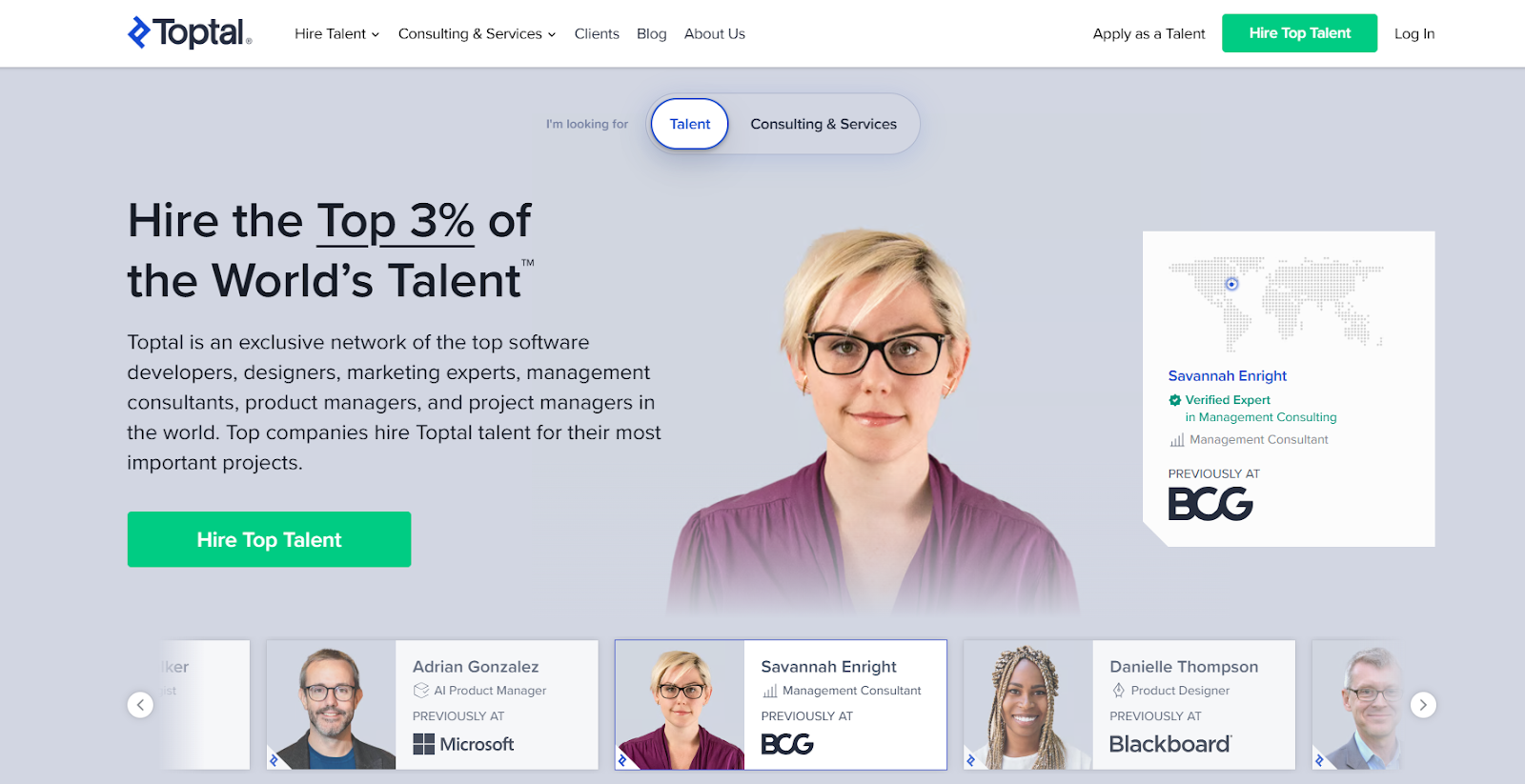
Toptal's three-stage process ensures every accepted developer meets high standards: language and professionalism screening, live-coding interview testing, real-time problem-solving, and a paid test project that measures how solutions perform in production.
What we learned:
Because clients trust the platform's curation, rate negotiations start from a position of strength. Engineers don't compete against low-cost bids. Companies using Toptal have committed to paying premium rates, which typically means more precise requirements, professional communication, and reliable payments.
Toptal pros:
- Premium pay rates: Projects start at $20 per hour with significantly higher rates for specialized expertise.
- Pre-vetted clients: Work with companies like Airbnb, Shopify, and Duolingo who show up ready to work.
- Platform reputation: Toptal's brand recognition follows you beyond individual contracts, enhancing your professional profile.
Toptal cons:
- Extremely selective: The 3% acceptance rate means the vetting process sets a high bar and requires a polished portfolio.
- Lengthy screening: The three-stage vetting process takes a significant time investment before accessing any projects.
- High availability expectations: Once onboarded, clients expect consistent responsiveness and meeting deadlines without flexibility issues.
Best for: Elite developers with proven track records and polished portfolios, seeking premium clients who value quality and are willing to invest in rigorous vetting for long-term access to high-paying projects.
5. Gun.io
Instead of scrolling through “remote-friendly” contracts that still expect you for 3 p.m. meetings, Gun.io connects you with U.S. clients who genuinely mean flexible hours. After uploading your resume, you’ll complete a quick behavioral interview and tackle a live code review that mirrors actual project work.
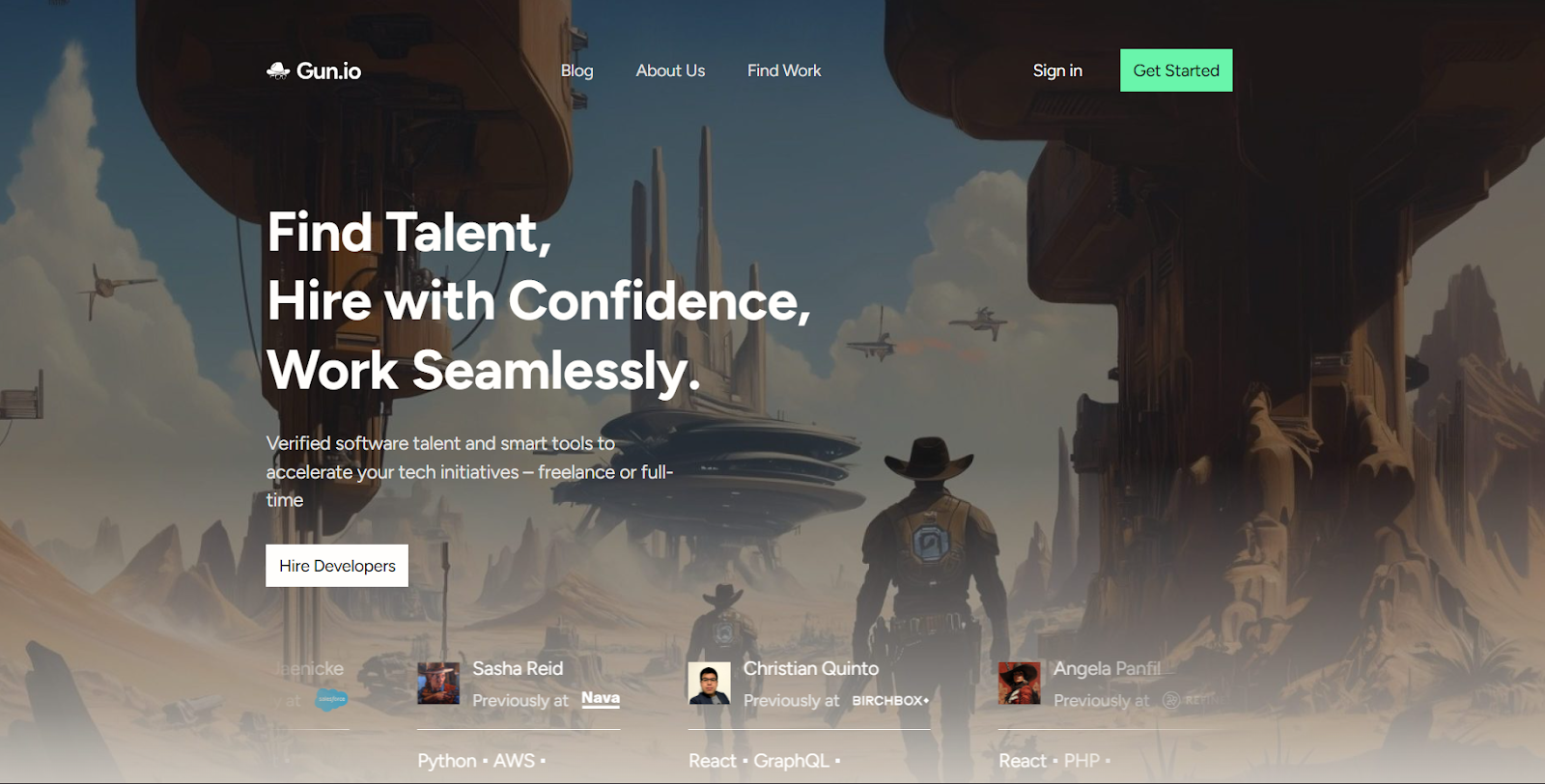
Pass these steps, and their talent agents match you with contracts where you can work just ten hours per week. Projects typically run for months rather than weeks, providing predictable income without constantly hustling for new clients.
Since Gun.io focuses exclusively on U.S. startups and mid-size tech companies, you won’t compete against ultra-low bids from around the world. Rates start at $60 per hour and vary based on experience, with the flexibility to set your own hourly rate.
Gun.io pros:
- U.S.-focused clients: Work with American companies that pay market rates and prefer long-term engagements over project-hopping.
- Weekly payment reliability: Automated payment processing every Friday eliminates chasing invoices or waiting over 30 days.
- True flexible scheduling: Set your own hours down to 10 hours per week, while clients genuinely accept asynchronous work.
Gun.io cons:
- Smaller opportunity pool: The platform’s focused approach results in fewer overall projects than major freelance marketplaces.
- U.S.-centric limitation: Geographic focus limits opportunities for developers outside the United States.
- Longer engagement preference: The platform optimizes for multi-month contracts, making it less ideal for developers seeking quick one-off projects.
Best for: Experienced U.S. developers wanting stable, long-term part-time contracts without constantly pitching new clients, with true flexibility to work mornings, nights, or weekends.
6. FlexJobs
Scrolling endless job boards only to encounter duplicate posts, expired ads, or outright scams can get exhausting fast. FlexJobs removes this headache by charging a small subscription fee, then screening every post before it reaches your dashboard.
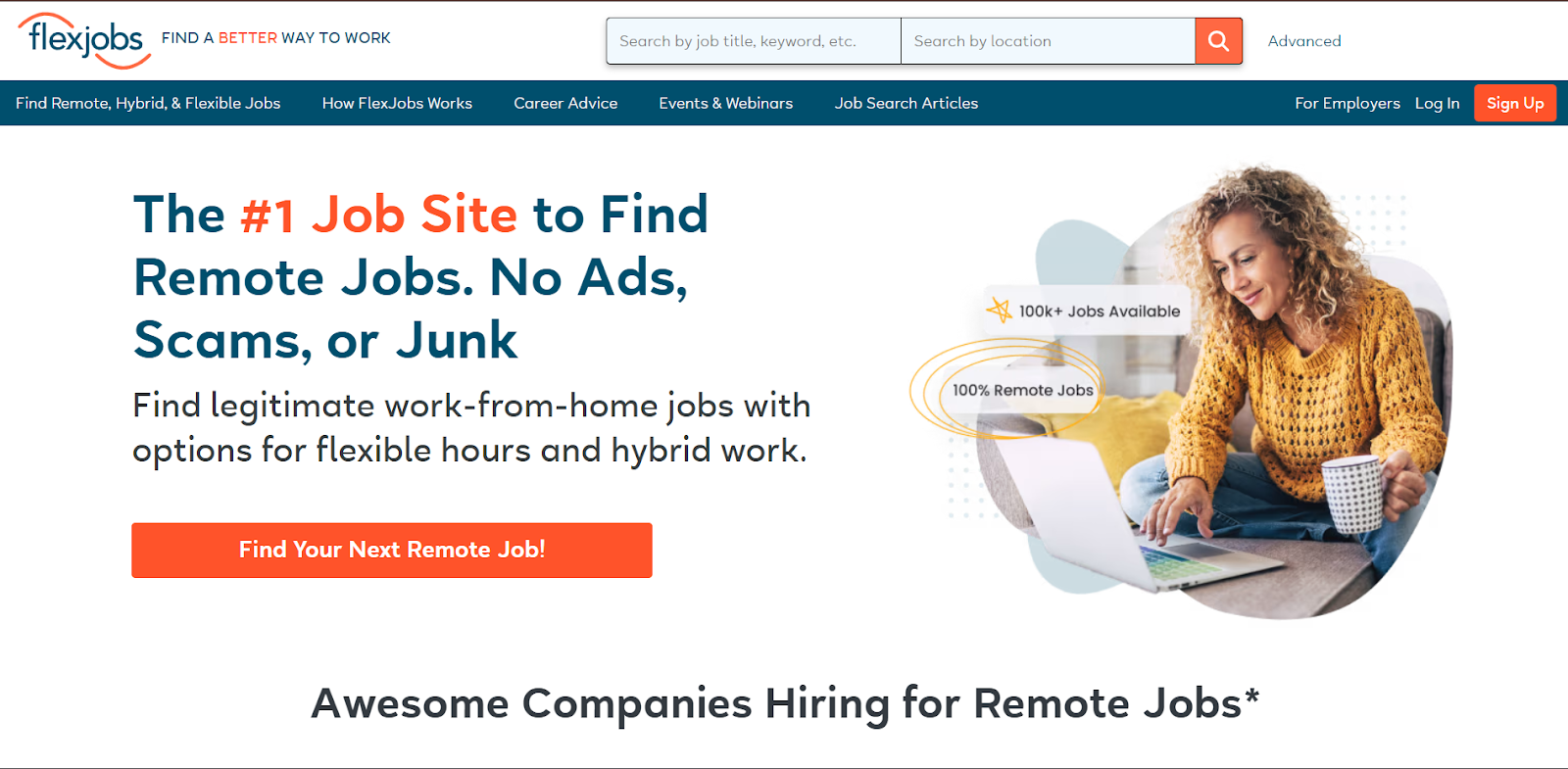
Instead of wondering whether a “remote Python refactor” opportunity is legitimate, you get a curated feed of openings (from Fortune 500 contracts to niche nonprofit gigs) that cleared a human vetting team.
You can refine your results further by filtering by programming language, years of experience, or by selecting “part-time only.” This subscription-based job board acts purely as a listing service, meaning you still apply company-by-company, negotiate your own rate, and handle invoicing yourself.
What we learned:
Time savings compound. Hours not spent filtering scams can be applied to actual applications or paid work. For active job seekers, the subscription often pays for itself quickly. Human vetting means listings come from real organizations with real positions.
Unlike project-only platforms, FlexJobs includes traditional part-time employment opportunities, which are valuable for engineers seeking stability with benefits. The platform is a job board, not a talent marketplace. You still apply company by company and manage your own negotiations. The value is in knowing every listing is worth your time.
FlexJobs pros:
- Legitimate pre-screened listings: Human vetting team removes scams, expired posts, and low-quality opportunities before they reach your feed.
- Wide variety of companies: Access listings from Fortune 500 companies, startups, nonprofits, and niche tech firms.
- Mix of employment types: Find both traditional part-time employment and contract positions, not just freelance gigs.
FlexJobs cons:
- Subscription fee required: You must pay a monthly or annual fee to access any listings, unlike on free platforms.
- The platform doesn’t handle contracts: you apply to each company individually, negotiate directly, and manage your own payment processing.
- Still requires applications: No talent matching or client introduction, so you’ll compete with other applicants through the traditional hiring process.
Best for: Developers who want pre-screened, legitimate job listings, particularly those seeking traditional part-time employment rather than project-based work, and are willing to invest a small subscription fee to avoid wasting time on scams.
7. Upwork (Expert-Vetted)
Landing work on a giant freelance marketplace can feel like shouting into the void with hundreds of bids, race-to-the-bottom pricing, and clients who disappear. Upwork’s Expert-Vetted tier cuts through this chaos. Only the top 1% of freelancers on Upwork earn the badge, but once you’re in, your profile gets premium placement that clients actually notice.
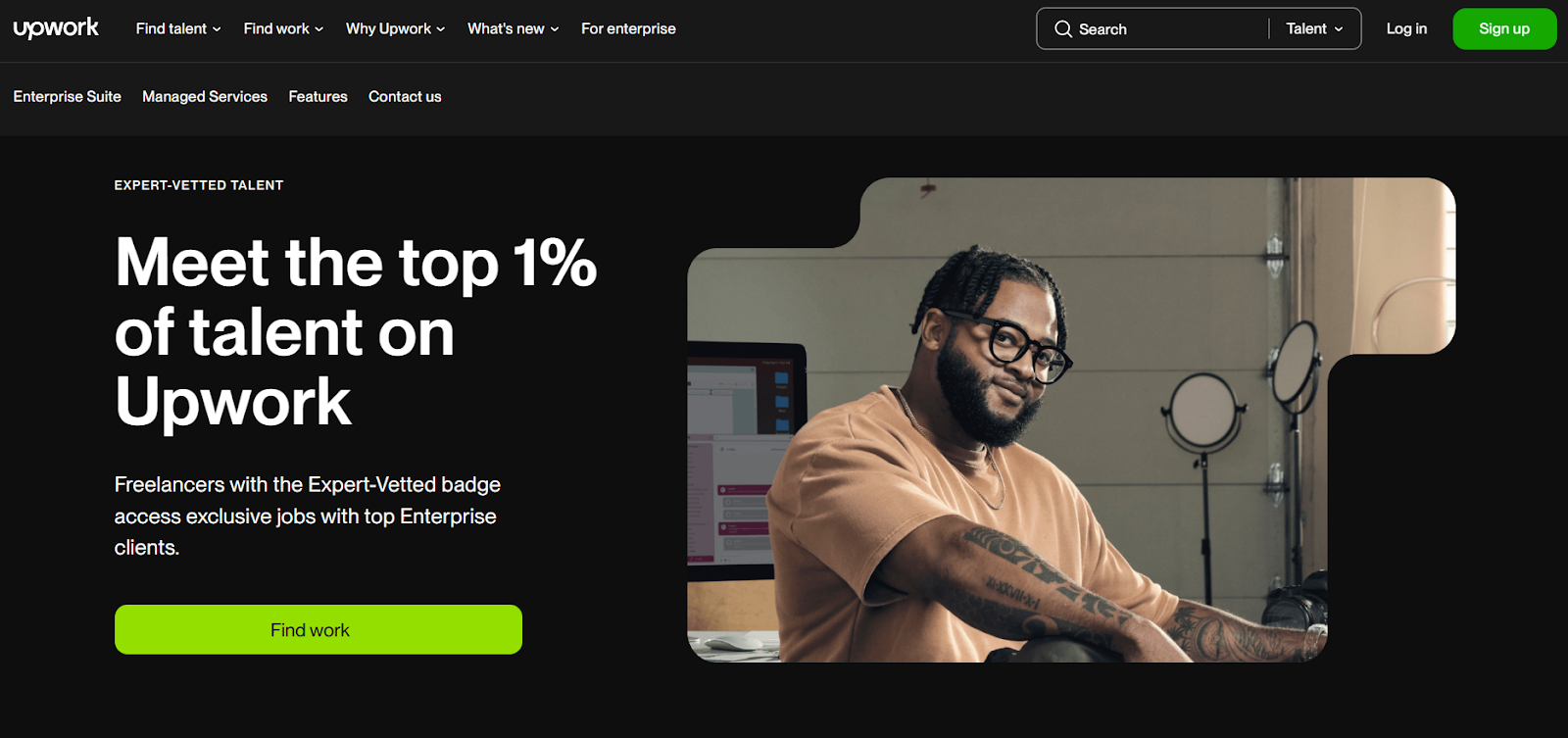
You qualify by maintaining a 90%+ Job Success Score, completing a brief video interview with an Upwork talent manager, and passing a targeted skills review. That single hour of vetting changes everything: your proposals jump to the front of hiring queues, and you gain access to private listings that rarely appear in the public feed.
Since Upwork’s inception, the volume of high-budget projects has been high, and you still set your own hourly limits for actual part-time work.
Upwork (Expert-Vetted) pros:
- Massive client base: Access to an established platform with billions in annual transaction volume and thousands of active clients.
- Priority visibility: Expert-Vetted badge gives your profile premium placement, reducing competition from lower-quality freelancers.
- Payment protection: Upwork’s escrow system and dispute resolution provide security against non-paying clients.
Upwork (Expert-Vetted) cons:
- Platform fees: Upwork takes up to 15% of earnings, based on factors such as supply and demand.
- Difficult qualification: Earning Expert-Vetted status takes serious effort, time, and a proven track record on the platform.
- Still requires proposals: Even at the top tier, you need to write winning proposals for each project rather than automatic matches.
Best for: Established Upwork professionals who've built a strong platform reputation and want premium placement, or engineers willing to invest in building that reputation over time.
How DataAnnotation stands apart
After analyzing these platforms, a pattern emerges: most optimize for what's easy to measure rather than what actually matters. Credentials are easy to verify. Client satisfaction is easy to track, and task completion is binary.
Code quality, architectural judgment, and whether work makes you better — those are hard to measure at scale.
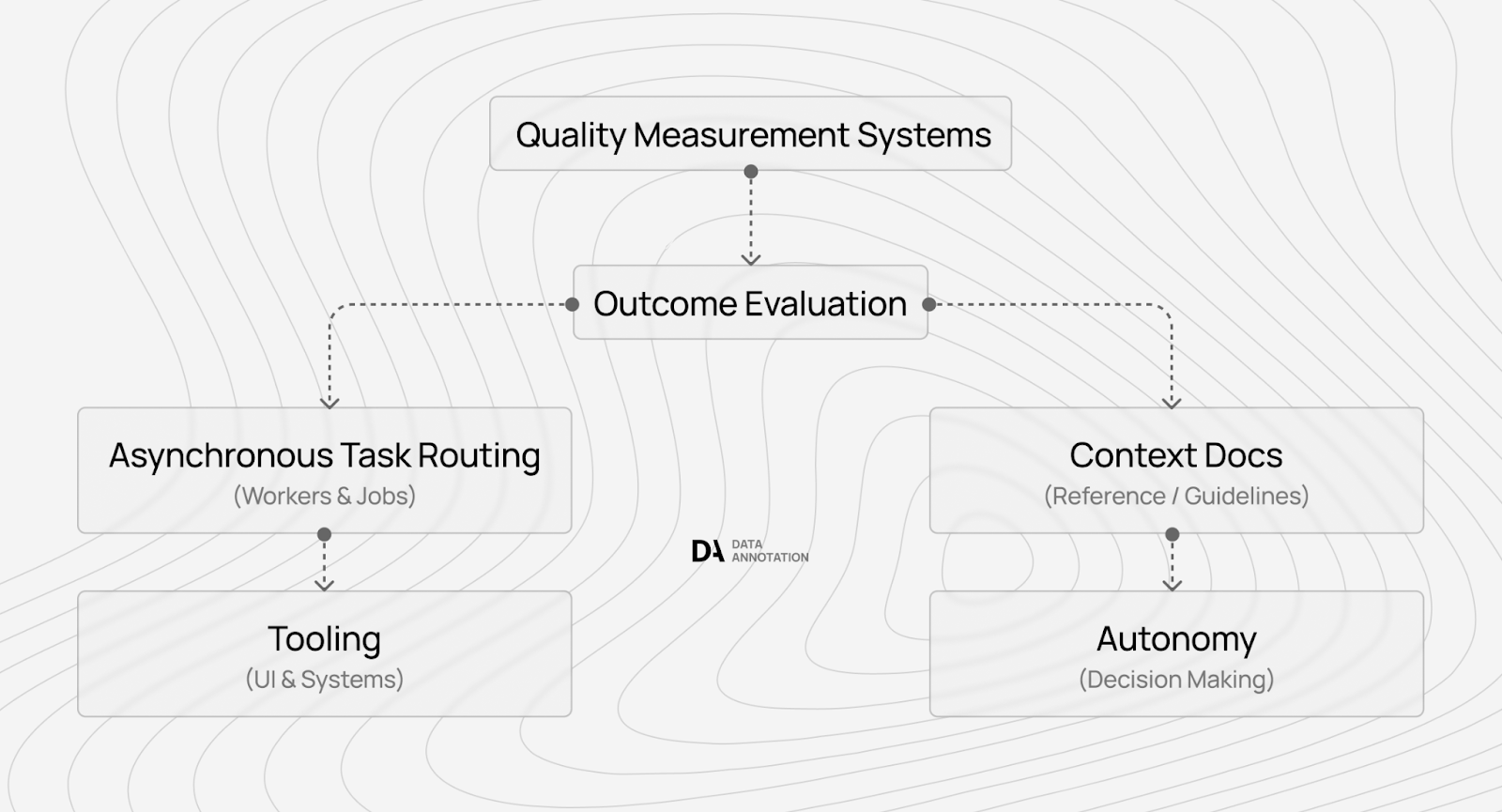
When we built DataAnnotation, we focused on solving this measurement problem. We evaluate your technical work: whether you spot edge cases others miss, whether your architectural critiques align with engineering best practices, and whether your code evaluations catch subtle issues.
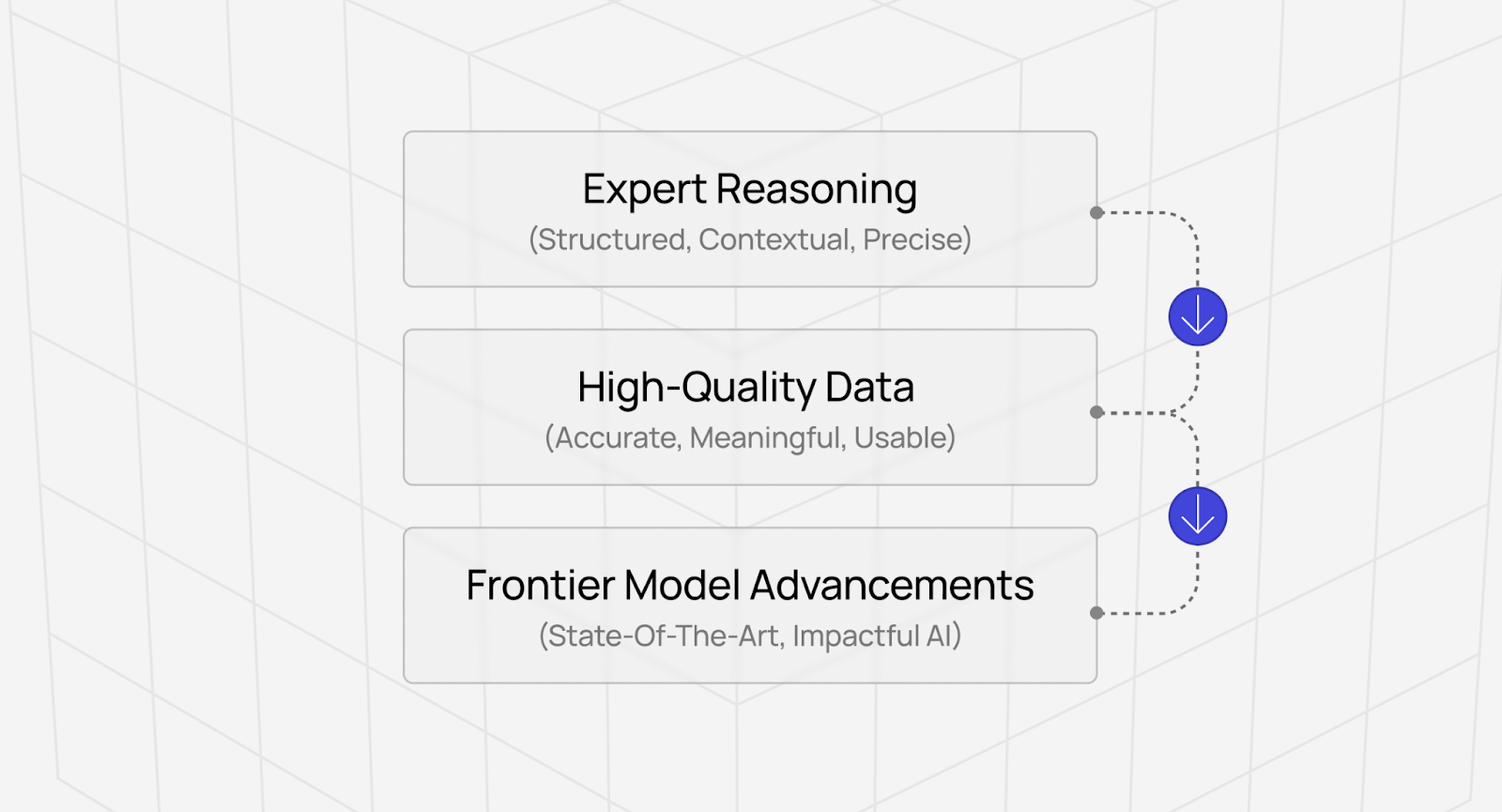
This matters because quality measurement determines what you optimize for. If platforms can't measure code quality, they can't reward it. If they can't distinguish between good-enough implementations and elegant solutions, they can't route sophisticated work to engineers capable of handling it.
What we optimize for
We've found that brilliant engineers care about more than just hourly rates.
They want:
- Work that compounds: Evaluating AI-generated architecture decisions expands your own systems thinking in ways that implementing features to spec doesn't
- Recognition for judgment: Getting matched to more complex projects because your technical evaluations are consistently insightful
- Schedule control without quality compromise: Working when it fits your life, on projects that actually use your expertise
The coding projects on DataAnnotation start at $40 per hour because the work requires absolute technical judgment — evaluating whether code is correct rather than well-designed, spotting security issues, and assessing scalability trade-offs.
It's not about churning through tickets. It's about bringing your whole critical thinking to problems that actually benefit from it.
Explore part-time coding projects at DataAnnotation
You've seen different platforms to access part-time software engineering work. Some optimize for access, some for rates, and some for specific hiring models.
However, if you want to work where code quality determines frontier AI advancement and expertise compounds over time, DataAnnotation offers immediate access after a single qualification assessment.
If you want in, getting started is straightforward:
- Visit the DataAnnotation application page and click “Apply”
- Fill out the brief form with your background and availability
- Complete the Starter Assessment
- Check your inbox for the approval decision (which should arrive within a few days)
- Log in to your dashboard, choose your first project, and start earning
No signup fees. We stay selective to maintain quality standards. Just remember: you can only take the Starter Assessment once, so prepare thoroughly before starting.
Apply to DataAnnotation if you understand why quality beats volume in advancing frontier AI — and you have the expertise to contribute.
.jpeg)