
Most platforms now filter software engineers by resume keywords and years of experience. Then they measure completion speed and client satisfaction scores. What they don't measure: whether your code is elegant enough to advance technical implementations, whether your architectural decisions will scale, whether you're actually getting better at your craft.
This creates a specific problem: what platforms measure determines what you, as a candidate, optimize for.
If they measure credentials, you’ll need to optimize your resume for brand-name companies. If they measure completion speed, you’ll have to optimize for shipping fast over shipping well. If they measure client satisfaction ratings, you’ll have to mindlessly say "yes" instead of pushing back on bad technical decisions.
The question: Does any of this utilize your exceptional skills?
This guide starts with a framework for evaluating part-time software engineering platforms based on technical depth rather than surface metrics, then applies it to eight options. Three questions separate platforms that develop your expertise from those that just fill your CV.
A framework to evaluate part-time software engineering platforms
When you're choosing where to take on part-time engineering work, three factors matter:
- Rate + volume: Does the platform pay well, and is work consistently available? A $100/hour rate means nothing if you can only land one 10-hour project per quarter.
- Expertise recognition: Do they measure credentials (resume keywords, years at FAANG) or actual capability (can you spot architectural flaws, write elegant solutions, make sound technical judgments)? The difference determines whether 5 years of experience gets you the same projects as 5 months of experience.
- Flexibility: Can you work on your own schedule, or does the platform require synchronous availability, client meetings, or fixed-hour commitments? Real flexibility means choosing when you work, not just where.
Most platforms optimize for one of these factors while sacrificing the others — high rates but rigid scheduling, flexible hours but credential-based gatekeeping, or volume availability but no differentiation between senior expertise and junior execution.
What are the top part-time software engineering platforms to get flexible tech work?
The platforms below offer different approaches to part-time software engineering work filtered through our evaluation framework.
Each has distinct advantages depending on whether you prioritize immediate project access, premium hourly rates, traditional employment relationships, or specialized matching services:
Each platform has distinct advantages worth diving into.
1. DataAnnotation
At DataAnnotation, we operate one of the world's largest AI training marketplaces (with over 100,000 remote workers contributing to frontier AI systems that serve millions). We offer flexible work hours where people work when their brains function optimally, disconnect when they need to, and choose projects that match their expertise.
As an expert engineer, you evaluate code quality, fix AI-generated bugs, and assess chatbot performance across Python, JavaScript, HTML, C++, C#, and SQL.
You sign up, complete the free Coding Starter Assessment, and unlock access to projects once you pass. Work availability runs 24/7 with no minimum hour requirements. Coding projects start at $40 per hour.
What we measure: Quality of your technical judgment on completed tasks. This is different from credential filtering (we don't really care where you have worked) or client ratings (you're evaluating AI output, not serving individual clients). Your actual work quality determines progression.
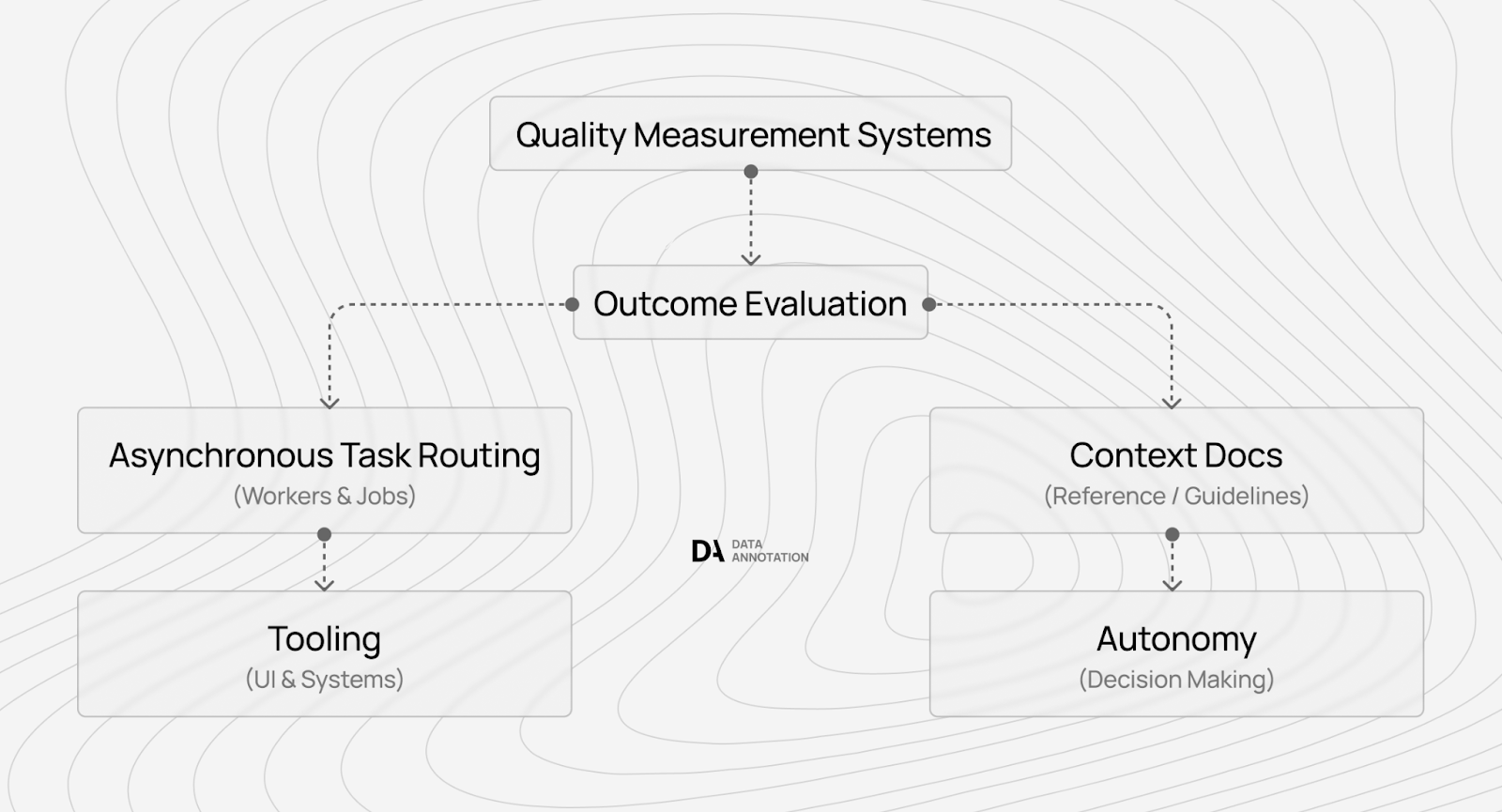
Quality ceiling: Projects range from code review to evaluating whether AI-generated solutions make sound architectural decisions rather than merely functional code. There's room to operate at higher levels through a specialized assessment.
DataAnnotation pros:
- Premium rates without negotiation: Coding projects start at $40 per hour with no client bidding, rate haggling, or platform fees cutting into your earnings.
- 24/7 project availability: Access projects around the clock, so you can work during school hours, late nights, or weekend mornings based on what fits your life.
- No minimum commitments: Choose how much you work each week based on project availability and your schedule, with no pressure to maintain daily login streaks.
- Straightforward qualification: Pass a single assessment rather than enduring weeks of technical screenings, take-home projects, and multiple interview rounds.
DataAnnotation cons:
- Task-based payment structure: You're paid per completed project rather than receiving a salary, so your income fluctuates based on how much you work and project complexity.
- Learning curve for specialized tiers: Higher-paying STEM and Coding projects demand domain expertise and genuine critical thinking ability.
Best for: Software engineers who want to work where code quality determines frontier AI advancement. The work compounds your expertise because you're evaluating architectural decisions rather than just shipping features.
2. Toptal
Toptal operates an exclusive network that accepts only the top 3% of applicants through a rigorous screening process.
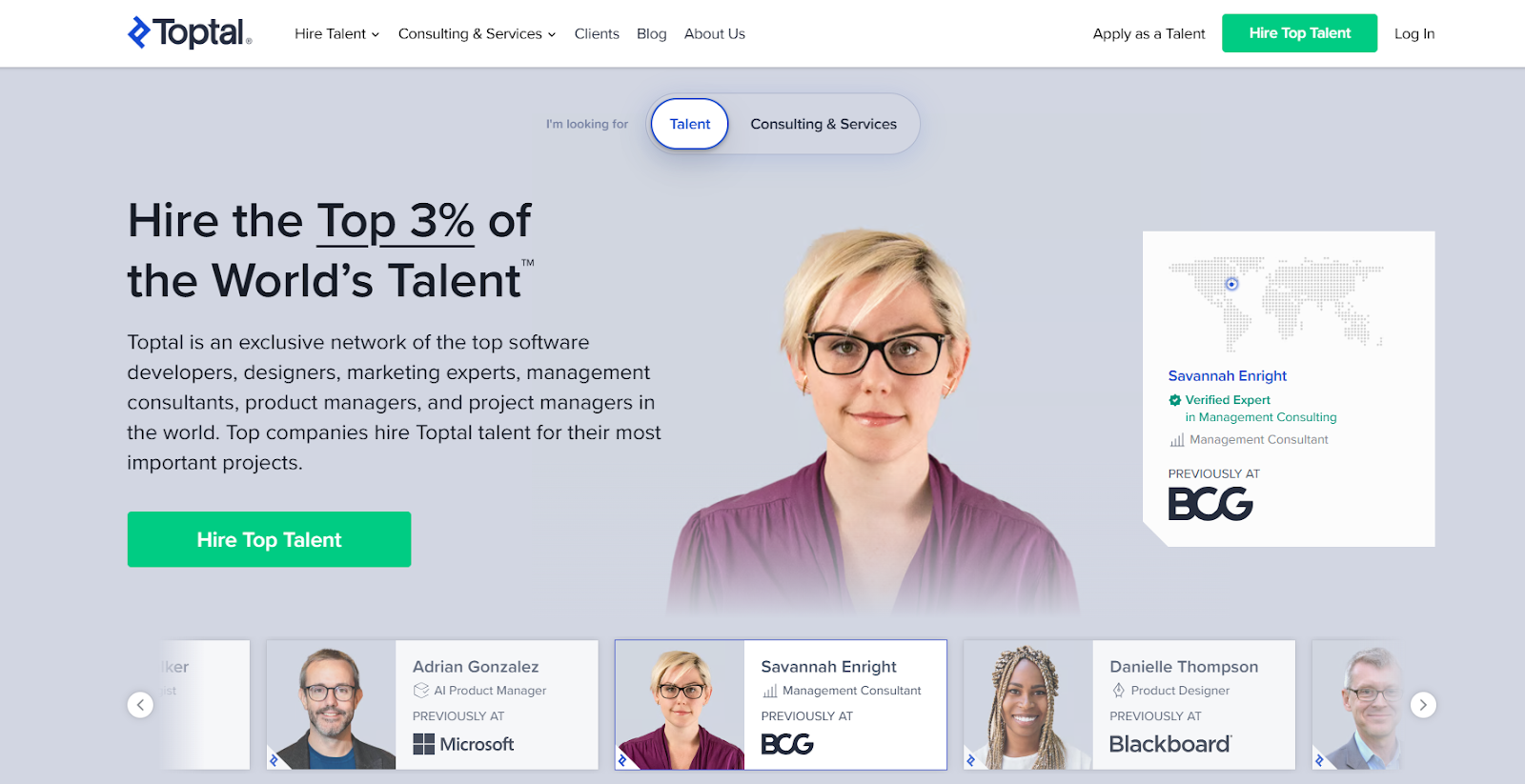
Once accepted, the platform matches you directly with enterprise clients seeking senior software engineers for long-term contracts. Toptal handles client acquisition while you focus entirely on technical work.
Software engineers on Toptal typically earn $20+ per hour depending on specialization and experience, with consistent opportunities for weekly engagements.
What they measure: Toptal measures technical capability through multi-stage assessments: timed coding challenges, system design interviews, and live problem-solving sessions. You're filtered by demonstrated senior-level skills across multiple domains, not just by keyword matches in your resume.
However, once you're in the network, project assignment depends heavily on availability matching and client preferences.
Quality ceiling: Enterprise implementation work — building features, fixing bugs, implementing specs. You're executing technical decisions made by others — solid ceiling for contract gigs.
Toptal pros:
- Premium rate floor: Projects start at $20 per hour, eliminating low-value work that wastes your technical expertise.
- Pre-vetted clients only: Enterprise companies and well-funded startups, not small businesses hunting for bargain development.
- Zero bidding required: Toptal's matching team connects you with appropriate projects based on your skills and availability.
- Long-term engagements: Most contracts run three to six months, giving you predictable income and reducing client acquisition overhead.
Toptal cons:
- Extremely selective process: Multi-stage technical assessment filters out 97% of applicants, so you'll need to demonstrate senior-level skills across multiple domains.
- Experience requirement: Primarily for software engineers with 5+ years of professional experience; junior and mid-level programmers rarely pass screening.
- Limited project autonomy: You work on the projects Toptal assigns based on client needs and your availability, not projects you choose.
- Geographic restrictions: Toptal focuses heavily on specific regions and time zones to match client needs.
Best for: Senior engineers who interview well and want stable, well-paying contracts. The vetting is rigorous, but you're executing within established systems rather than making architectural calls.
3. Upwork
Upwork runs a two-sided marketplace connecting freelance software engineers with clients across web development, mobile apps, and specialized coding projects. You create a profile, purchase "Connects" to submit proposals, and bid on posted projects.
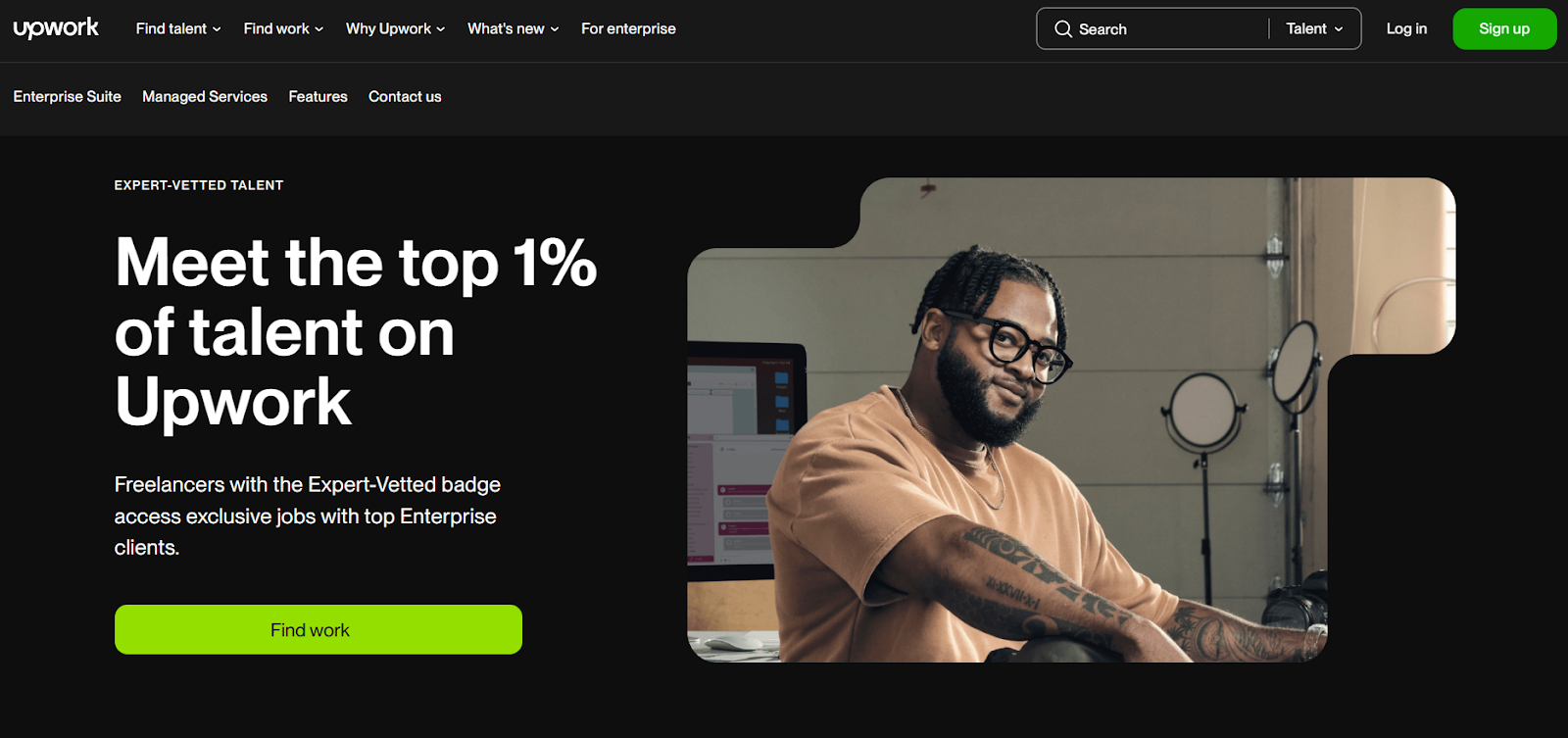
Software engineer rates on Upwork start from $25 per hour, depending on specialization and experience level. The platform handles contracts, time tracking, and payments through an escrow system.
What they measure: Upwork's algorithm prioritizes profile completeness, response speed, and client satisfaction scores. You're ranked primarily by whether clients leave you 5-star reviews and by how quickly you respond to messages.
The platform cannot evaluate whether your code is elegant or maintainable — only whether the client marked the project complete and left positive feedback.
This creates optimization pressure around client management rather than code quality. Engineers who communicate well and manage expectations may rank higher than those who write better code but communicate less frequently.
Quality ceiling: Can range from basic WordPress fixes to complex system builds. The quality ceiling depends entirely on which projects you can win through proposals. However, the competitive bidding structure means complex projects can often go to established profiles with extensive reviews, creating a chicken-and-egg problem for newer users.
Upwork pros:
- Massive client pool: Thousands of active project postings daily across all coding specializations, from WordPress customization to machine learning implementations.
- Escrow protection: Upwork holds client payments in escrow and releases funds on schedule, reducing payment disputes and non-payment risk.
- Built-in project management: Time tracking, milestone management, and communication tools eliminate the need for separate invoicing or contract software.
- All experience levels welcome: Junior software engineers can compete for entry-level projects while specialists bid on high-value enterprise work.
Upwork cons:
- Intense competition: Popular projects receive dozens of proposals within hours, forcing you to compete on price or write lengthy proposals that may go unread.
- Platform fees cut deep: The 20% fee on new client relationships significantly reduces your effective hourly rate, especially for smaller projects.
- Connect costs add up: Each proposal requires one to six Connects, depending on project value; Connects cost money once your monthly free allocation runs out.
- Race-to-the-bottom pricing: Global competition often drives down rates as software engineers bid aggressively to win work.
Best for: Engineers comfortable with self-marketing who want project diversity. Success depends more on proposal-writing and client management skills than code quality. The work doesn't necessarily compound your technical expertise.
4. Gun.io
Gun.io operates a U.S.-focused network that pre-screens both software engineers and clients through technical interviews and background checks. The platform functions as a matchmaker rather than a marketplace.
Gun.io's team reviews your profile, understands your skills and availability, then connects you directly with appropriate projects. Software engineers on the platform earn an average of $45+ per hour, with payments processed weekly.
What they measure: Gun.io measures technical capability through interviews and code samples during the initial vetting process. Once accepted, placement depends on talent managers matching your stated skills and availability with client needs.
Strong interviewers who demonstrate breadth across multiple domains can get better opportunities than specialists who excel deeply in one area.
Quality ceiling: Ongoing contract work for established companies — typically implementation and feature development. Similar to Toptal, but slightly lower in client sophistication.
Gun.io pros:
- Pre-vetted client quality: Work with established companies that have been screened for budget, timeline expectations, and technical requirements.
- Professional matching service: Talent managers handle the client discovery and initial conversations, saving you hours of active job hunting.
- Higher average rates: Clients understand they're paying for verified expertise, leading to better compensation than on mass-market platforms.
- Reduced proposal overhead: Focus on a handful of qualified opportunities rather than submitting dozens of speculative bids.
Gun.io cons:
- Geographic restrictions: Primary focus on U.S.-based software engineers limits accessibility for international talent.
- Experience requirements: Software engineers with fewer than five years of experience may not clear the initial screening criteria.
- Limited project volume: Fewer total opportunities than massive marketplaces because quality, not quantity, drives their client roster.
- Vetting timeline: Typically, several weeks pass between the initial application and the first project match.
Best for: U.S.-based engineers with 3+ years of professional experience who want vetted clients without proposal writing. Quality is defined by your initial screening performance, not continuous output measurement.
5. FlexJobs
FlexJobs operates as a paid job board specializing in legitimate remote, flexible, and part-time positions. Membership typically costs $25 per month or $60 per year, depending on the subscription length.
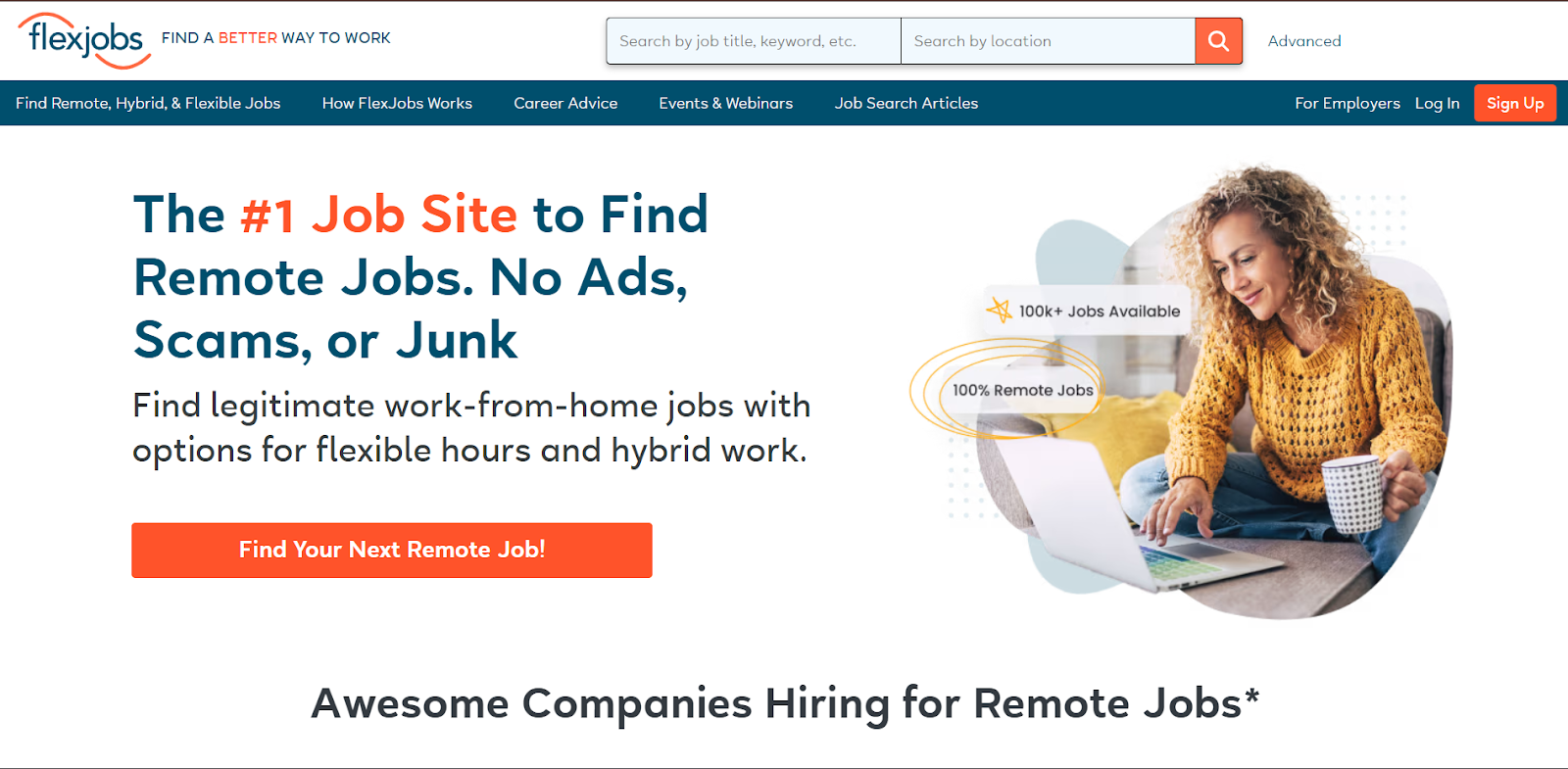
Every posting is manually reviewed to verify that the company exists, the role is real, and compensation expectations are clear. You filter by "part-time" schedule type and narrow to "software development" or "web development" categories to find relevant opportunities.
What they measure: FlexJobs doesn't measure anything about you directly — they're a job board, not a placement platform. Once you apply to posted positions, you enter each company's individual hiring process. Success depends entirely on how those companies evaluate candidates, which varies from resume screening to multi-round technical interviews.
The platform's value lies in filtering out illegitimate postings, not in assessing or advancing your candidacy.
Quality ceiling: The quality ceiling is entirely dependent on which companies post and which roles you pursue. FlexJobs includes everything from junior developer positions at small startups to senior roles at established enterprises.
The ceiling is whatever the broader job market offers.
FlexJobs pros:
- Pre-screened legitimate opportunities: Every posting has been manually reviewed to verify the company exists, the role is real, and compensation expectations are clear.
- Diverse company types: Access opportunities from seed-stage startups to enterprise technology companies in a single searchable database.
- No bidding competition: Traditional application processes where your skills and experience speak for themselves without public rate comparisons.
- Flexible work focus: The entire platform is built around remote and flexible positions, unlike general job boards, where these are afterthoughts.
FlexJobs cons:
- Subscription fee overhead: Paying for the membership upfront before knowing if you'll find suitable opportunities requires commitment.
- Not software engineer-specialized: Software engineering represents one category among many, so the platform isn't optimized for technical recruiting.
- Standard hiring timelines: Expect weeks between application and offer, not the immediate work access common on task-based platforms.
- Multiple applications required: You're still submitting to individual companies rather than passing one qualification and accessing ongoing work.
Best for: Software engineers seeking traditional employment relationships with flexibility baked in. FlexJobs curates opportunities but doesn't evaluate your work or accelerate your candidacy.
6. Wellfound
Wellfound (formerly AngelList Talent) connects software engineers directly with startup founders and hiring managers. You create a profile highlighting your skills, experience, and desired work arrangement, then browse posted opportunities or respond to companies that reach out.
The "remote" and "part-time" filters surface roles where founders explicitly need fractional engineering help. Communication happens directly through the platform's messaging system, often from initial contact to an offer within 1 to 2 weeks.
What they measure:
Wellfound measures profile attractiveness — how compelling your background appears to startup founders scanning for technical talent. This typically means recognizable companies on your resume, visible side projects, or contributions to well-known open source projects.
Individual startup hiring processes vary widely once you connect, from casual technical conversations to full interview loops. The platform facilitates discovery but doesn't standardize evaluation.
Quality ceiling: Early-stage startups often give engineers significant architectural autonomy and technical decision-making authority. The quality ceiling can be high if you join the right company at the right stage, but that depends entirely on the specific opportunity and your negotiated role.
Wellfound pros:
- Direct founder access: Message decision-makers directly, without navigating multi-layer HR departments.
- Equity participation: Negotiate ownership stakes alongside cash compensation to potentially create significant long-term value.
- Technical autonomy: Early-stage companies often grant software engineers significant authority over architectural decisions.
- Streamlined hiring process: Skip the five-round interview marathons common at established companies.
Wellfound cons:
- Financial uncertainty: Funding runway concerns and pivot risks mean roles can disappear suddenly.
- Less process definition: Expect ambiguous requirements and shifting priorities as companies find product-market fit.
- Intense competition: Quality flexible roles at promising startups attract hundreds of applications.
- Equity uncertainty: Stock options have unclear value until successful exit events materialize, which may never occur.
Best for: Software engineers comfortable with startup risk who want equity upside and architectural autonomy. The quality ceiling depends entirely on the specific startup you join and the role you negotiate.
7. We Work Remotely
We Work Remotely curates remote job postings from companies that have built their operations for distributed work. The platform requires companies to pay to post openings, which filters out most low-quality listings.
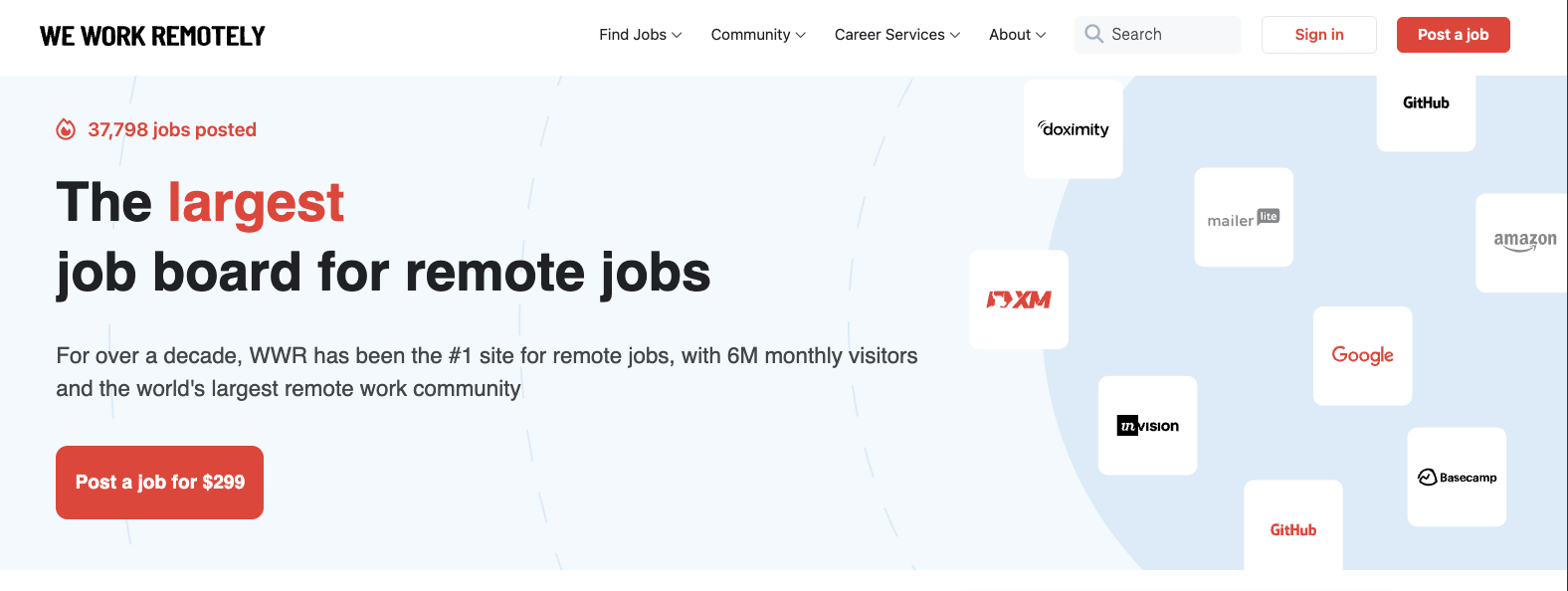
Search the "Programming" category and toggle "Part-Time" to surface current opportunities. Applications happen directly through company websites rather than through the platform.
What they measure: We Work Remotely doesn't measure anything about candidates — it's a job board that connects you to company career pages. Once you click through to apply, you're in each company's individual hiring process, which could involve anything from automated resume screening to extensive technical evaluations.
Quality ceiling: Depends entirely on which companies post and which roles you pursue. The platform includes everything from contract development positions to senior engineering leadership roles.
The ceiling is whatever the specific opportunity offers.
We Work Remotely pros:
- Authentic remote culture: Companies posting here built their operations for distributed work rather than reluctantly accommodating it.
- Transparent company information: Listings typically include clear details about time zone requirements, compensation ranges, and tech stack specifics.
- Quality signal: The posting fee requirement filters out most spam and illegitimate opportunities.
- Clean browsing experience: No banner ads or algorithmic feed manipulation, just straightforward job listings.
We Work Remotely cons:
- No payment protection: You're working directly with companies without platform escrow or dispute resolution.
- High competition: Premium flexible roles attract hundreds of qualified applicants.
- Standard hiring timelines: Expect a wait of weeks between application submission and a final offer.
- Application repetition: Submit customized materials for each opportunity rather than reusing the same qualification.
Best for: Software engineers who want traditional employment with remote flexibility and are willing to invest time in multiple applications. The platform curates opportunities but doesn't measure your work.
8. Hired
Hired reverses traditional job hunting by having companies send interview requests to you. The platform operates through two-week matching cycles, during which you create a comprehensive profile detailing your skills, experience, and desired compensation.
You can specify "part-time only" availability so recruiters see your constraints immediately. Companies review qualified candidates and send interview requests with transparent salary ranges and role details.
What they measure: Hired measures profile strength — how attractive your background appears to companies scanning for talent. This means recognizable employers, in-demand skills, and quantifiable achievements on your resume. The platform's algorithm surfaces your profile to companies whose requirements match your stated expertise.
Once companies request interviews, you enter their individual hiring processes. Hired facilitates the introduction but doesn't standardize how companies evaluate technical capability.
Quality ceiling: Depends entirely on which companies recruit through Hired and which specific roles they're filling. The platform primarily focuses on full-time, permanent positions, with part-time opportunities accounting for a smaller share.
The ceiling is whatever the specific opportunity offers.
Hired pros:
- Passive candidate positioning: Receive opportunities without active hunting, letting companies sell you on their roles.
- Transparent compensation upfront: See salary ranges and equity details before investing time in interviews.
- Competitive offer dynamics: Multiple simultaneous opportunities strengthen your negotiating position.
- Efficient timeline: Concentrated two-week cycles prevent the lengthy process common on other platforms.
Hired cons:
- Timing dependency: If strong matches don't materialize during your active window, you must wait for the next cycle.
- Full-time bias: The platform focuses primarily on permanent roles, with part-time opportunities accounting for a smaller share.
- Geographic limitations: Strongest in major North American and Western European tech markets.
- Profile requirements: Success demands substantial experience and measurable achievements to attract the company's interest.
Best for: Experienced engineers with strong track records who prefer companies coming to them. Success depends on profile attractiveness, not demonstrated code quality.
How DataAnnotation stands apart
After analyzing these platforms, a pattern emerges: most optimize for what's easy to measure rather than what actually matters. Credentials are easy to verify. Client satisfaction is easy to track, and task completion is binary.
Code quality, architectural judgment, and whether work makes you better — those are hard to measure at scale.
When we built DataAnnotation, we focused on solving this measurement problem. We evaluate your technical work: whether you spot edge cases others miss, whether your architectural critiques align with engineering best practices, and whether your code evaluations catch subtle issues.
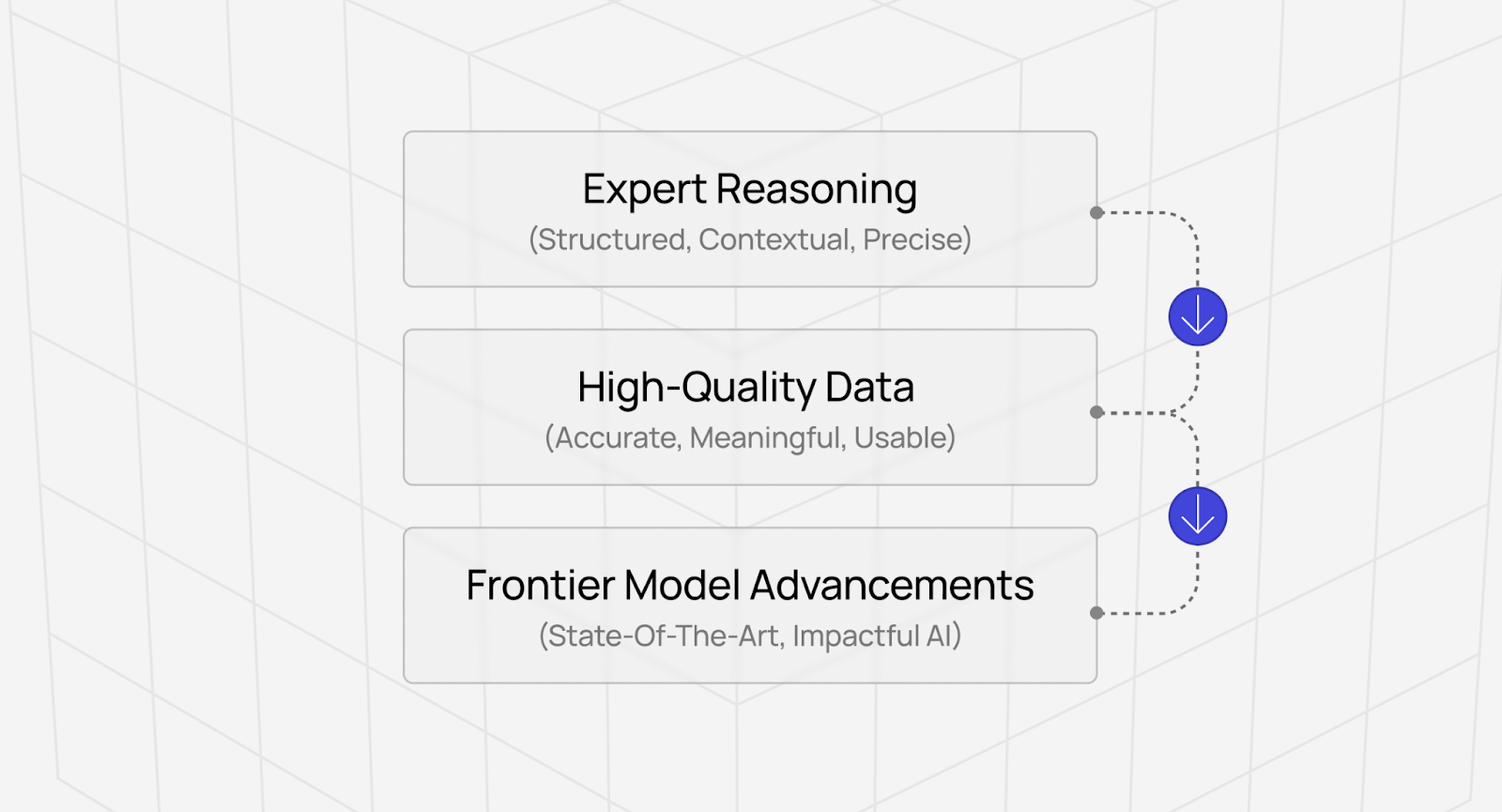
This matters because quality measurement determines what you optimize for. If platforms can't measure code quality, they can't reward it. If they can't distinguish between good-enough implementations and elegant solutions, they can't route sophisticated work to engineers capable of handling it.
What we optimize for
We've found that brilliant engineers care about more than just hourly rates.
They want:
- Work that compounds: Evaluating AI-generated architecture decisions expands your own systems thinking in ways that implementing features to spec doesn't
- Recognition for judgment: Getting matched to more complex projects because your technical evaluations are consistently insightful
- Schedule control without quality compromise: Working when it fits your life, on projects that actually use your expertise
The coding projects on DataAnnotation start at $40 per hour because the work requires absolute technical judgment — evaluating whether code is correct rather than well-designed, spotting security issues, and assessing scalability trade-offs.
It's not about churning through tickets. It's about bringing your whole critical thinking to problems that actually benefit from it.
Who this work isn’t for
AI training isn't mindless data entry. It's not a side hustle. We believe it's the bottleneck to AGI.
Every frontier model (the systems powering ChatGPT, Claude, Gemini, etc.) depends on human intelligence that algorithms cannot replicate. As models become more capable, this dependence intensifies rather than diminishes.
AI trainers on our platform work on problems advancing frontier AI systems. They're teaching models to reason about physics, write better code, and understand complex language. Their evaluations directly improve capabilities used by millions of people.
This work isn't for everyone — and that's intentional.
We maintain selective standards because quality at the frontier scale requires genuine expertise, not just effort. If you're exploring AI training work because you heard it's easy money that anyone can do, we’re afraid, this isn't the right platform.
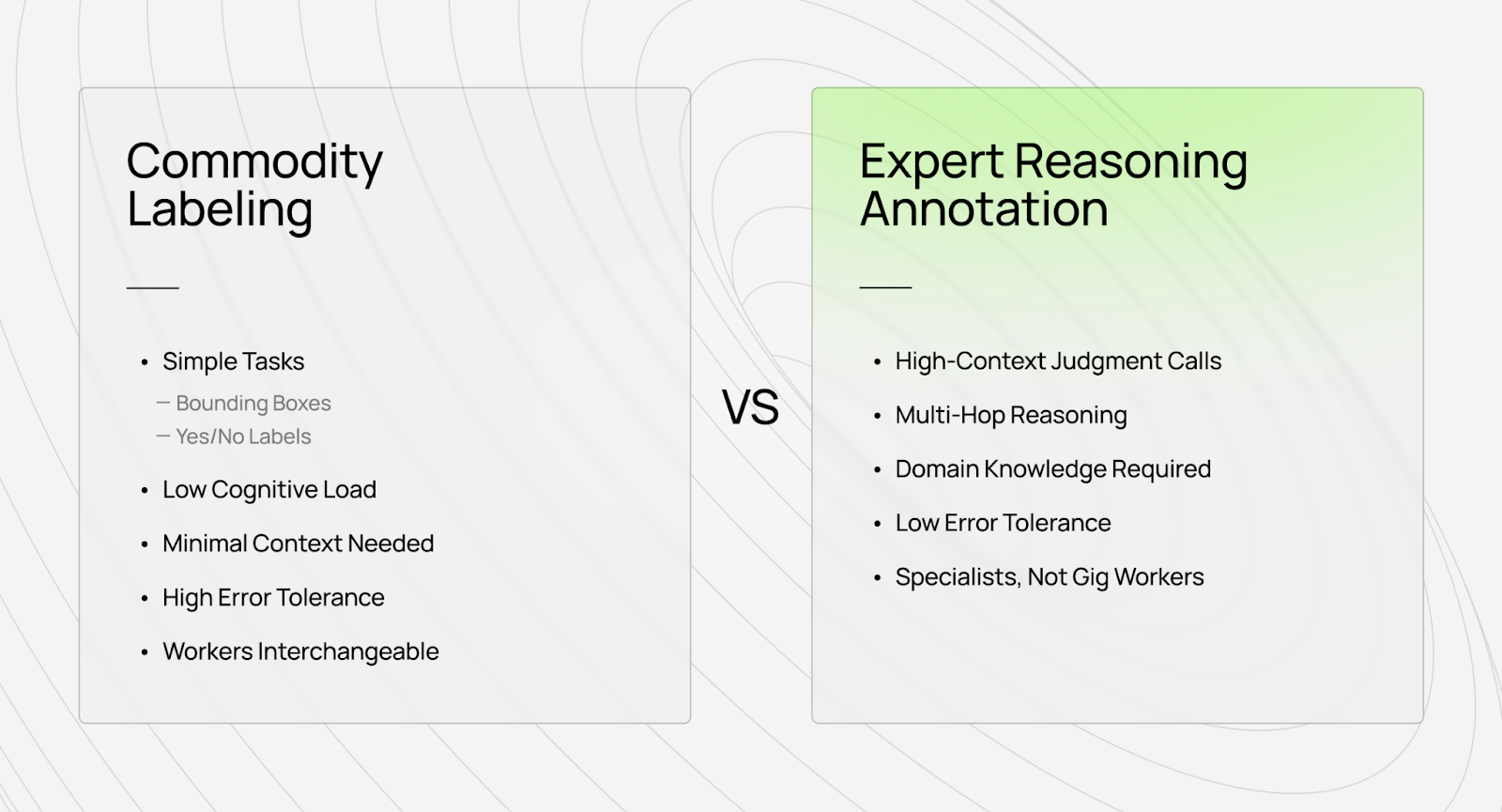
If you're looking to maximize hourly volume through minimal-effort clicking, there are commodity platforms better suited to that approach. If credentials matter more to you than demonstrated capability, our qualification process can discourage you.
Qualification system
At DataAnnotation, we operate through a tiered qualification system that validates expertise and rewards demonstrated performance.
For coding projects (starting at $40/hour), it involves AI-generated code evaluation across Python, JavaScript, HTML, C++, C#, SQL, and other languages.
Entry starts with a Coding Starter Assessment that typically takes about 1 - 2 hours to complete. This isn't a resume screen or a credential check — it's a performance-based evaluation that assesses whether you can do the work.
Once qualified, you select projects from a dashboard showing available work that matches your expertise level. Project descriptions outline requirements, expected time commitment, and specific deliverables.
The work here at DataAnnotation fits your life rather than controlling it.
Is the work hard? Yes. Does it require deep thinking? Absolutely.
Explore part-time coding projects at DataAnnotation
You've seen different platforms to access part-time software engineering work. Some optimize for access, some for rates, and some for specific hiring models.
However, if you want to work where code quality determines frontier AI advancement and expertise compounds over time, DataAnnotation offers immediate access after a single qualification assessment.
If you want in, getting started is straightforward:
- Visit the DataAnnotation application page and click “Apply”
- Fill out the brief form with your background and availability
- Complete the Starter Assessment
- Check your inbox for the approval decision (which should arrive within a few days)
- Log in to your dashboard, choose your first project, and start earning
No signup fees. We stay selective to maintain quality standards. Just remember: you can only take the Starter Assessment once, so prepare thoroughly before starting.
Apply to DataAnnotation if you understand why quality beats volume in advancing frontier AI — and you have the expertise to contribute.
.jpeg)