
The tech industry assumes a clean hierarchy: programmer, developer, engineer. These roles range from implementation to architecture, entry-level to senior, and lower pay to higher pay.
HR departments and tech interviewers slot these titles into salary bands. Some career coaches also sell courses on climbing from one to the next. However, the hierarchy has one problem: it measures almost nothing about actual capability.
This guide breaks down exactly how developers, programmers, and engineers differ in compensation, scope, and growth potential.
5 key differences between a programmer, a developer and an engineer
The fundamental hierarchy places programmers as code implementers, developers as feature builders, and engineers as system architects. Know where you fit to avoid accepting roles that either limit your growth or require skills beyond your current expertise.
Understanding these technical titles requires examining how their responsibilities, compensation, and career progression diverge:
Scope of responsibilities
Programmers receive detailed specifications and translate them into working code. As a programmer, you’re handed requirements like “build a function that sorts user data by timestamp” and implement exactly that. You focus on code quality without broader design decisions.
Developers own the entire feature lifecycle from concept through deployment. They make decisions about user experience, database structure, and API design.
Engineers operate at the highest level. They design entire systems that handle millions of users while balancing performance, security, and maintainability.
The practical difference shows in daily work. Programmers spend most of their time in text editors implementing specific functions. Meanwhile, developers alternate between coding, testing, and collaborating with designers or product managers.
Engineers divide time between architecture planning, code reviews, mentoring junior staff, and hands-on implementation of complex components.
Technical decision-making authority
As a programmer, technical decisions arrive predetermined. You implement algorithms designed by others, using the languages and frameworks your team selected. Your autonomy centers on how you write code, not what you build or why.
Developers make feature-level choices about implementation approach, technology selection for specific components, and trade-offs between development speed and future flexibility.
Software engineers hold architectural authority. You decide whether the system needs microservices or a monolith, which database technologies serve specific use cases, and how services communicate.
System-level decisions like these shape products for years and require understanding business requirements alongside technical constraints.
Collaboration and communication patterns
Programmers typically work independently or in small coding teams. They receive assignments and deliver completed code with minimal cross-functional interaction. As a programmer, your primary communication involves code reviews and technical clarifications with other developers.
Developers engage constantly across disciplines. They translate between technical and business stakeholders while coordinating with designers, QA engineers, and product managers throughout feature development.
Engineers operate at an even broader level. They interface with executives to align technical strategy with business goals. As an engineer, you present architectural proposals, justify technology investments, and mentor teams while maintaining enough hands-on coding to stay technically credible.
Strong communication skills become as critical as technical expertise at this level.
Compensation and market value
The salary hierarchy reflects responsibility scope. Programmers earn a median of $98,670 annually, compensated for implementing code to specification. Software engineers earn $132,782 on average, with senior engineers and architects often exceeding the average as their system design expertise becomes business-critical.
Software developers earn an average of $120,730 per year, reflecting ownership of complete features and broader technical decision-making. Experience amplifies these differences.
Entry-level programmers and developers earn similar amounts, but the gap widens significantly at mid-career. Senior software engineers with proven architectural skills can reach higher tiers at major technology companies.
Who is a programmer?
A programmer writes, tests, and maintains code to create software, websites, and applications. As a programmer, you translate human instructions and design blueprints into languages like Python or Java that computers can understand and execute.
The role emphasizes coding proficiency and attention to detail rather than system design or feature ownership.
Core skills and responsibilities
Programmers need deep technical capabilities focused on code implementation and maintenance:
- Code writing: Implement functions, classes, and modules according to detailed specifications to ensure code meets performance and quality standards.
- Debugging and testing: Identify and fix bugs in existing code, write unit tests to verify functionality, and maintain code quality throughout the development process.
- Language proficiency: Master multiple programming languages and understand their appropriate use cases, syntax patterns, and performance characteristics.
- Algorithm implementation: Translate algorithmic designs into efficient code to optimize for time and space complexity based on project requirements.
- Documentation: Write clear code comments and technical documentation that explain implementation details for future maintenance.
- Version control: Use Git or similar tools to manage code changes, collaborate on shared codebases, and track implementation history.
- Code review participation: Review peers' code to catch errors and ensure compliance with team standards and best practices.
The work rewards precision and technical craftsmanship. You focus on making code elegant, efficient, and maintainable rather than deciding what features to build or how systems connect.
Work environment and career paths
Most programmers work within larger development teams where others handle architecture and feature design.
As a programmer, your assignments arrive well-defined: implement this API endpoint, optimize that database query, or refactor this legacy module. The day-to-day emphasizes heads-down coding with periodic check-ins.
A programmer's career typically follows these patterns:
- Junior to senior programmer: Build expertise in specific languages and domains and take on more complex implementation challenges while mentoring junior colleagues on coding standards.
- Transition to developer role: Expand responsibilities to include feature design and user story implementation, moving beyond pure code writing into broader software development.
- Specialize in technical areas: Focus on specific domains like database programming, embedded systems, or automation scripting, where deep implementation expertise commands premium rates.
- Move into QA engineering: Leverage programming skills in quality assurance roles that require technical depth for test automation and system validation.
Many experienced programmers transition into software development or engineering roles to access better compensation and career growth, as automation increasingly handles routine coding tasks.
Who is a developer?
A developer designs, builds, and maintains complete applications or features that solve specific user problems. As a developer, you own the entire development process from analyzing requirements through deployment to making technical decisions about the implementation approach, all while collaborating with cross-functional teams.
The role combines coding skills with product thinking and project management.
Core skills and responsibilities
Developers need comprehensive technical and collaborative capabilities that extend beyond pure programming:
- Feature design: Analyze user needs, translate them into technical specifications, and make decisions about user interface design, data models, and API contracts.
- Full-stack implementation: Write code across front-end interfaces, back-end logic, and database layers. Understand how components integrate into cohesive applications.
- Testing and quality assurance: Develop comprehensive test suites including unit tests, integration tests, and end-to-end tests that verify application functionality.
- Deployment and operations: Manage application deployment to staging and production environments, monitor performance, and troubleshoot issues in live systems.
- Collaboration: Work closely with designers on user experience, with product managers on requirements clarification, and with other developers on shared codebases.
- Technology evaluation: Research and recommend frameworks, libraries, and tools that accelerate development while meeting quality and maintainability requirements.
- Technical communication: Explain technical concepts to non-technical stakeholders, document system behavior, and participate in design discussions with team members.
Success requires balancing technical excellence with pragmatic decision-making. You ship working features that meet deadlines rather than perfecting code indefinitely.
Work environment and career paths
Developers work in collaborative environments where shipping features matters more than organizational hierarchy. Startups and product companies especially value developers who can handle ambiguity and deliver complete solutions with minimal hand-holding.
A developer's career offers multiple directions:
- Senior developer: Take ownership of larger features or complete products, mentor junior developers, and influence technical direction for your team’s domain.
- Technical lead: Guide development teams through technical decisions and project execution while remaining heavily involved in hands-on coding and code review.
- Product-focused roles: Transition into positions like product engineer or technical product manager, where development expertise informs product strategy and roadmap decisions.
- Specialized tracks: Deep-dive into front-end, back-end, mobile, or other specializations where expert-level capability commands higher compensation and interesting challenges.
Many developers intentionally maintain breadth, as they enjoy the variety of working across the full technology stack rather than specializing in a single domain.
Who is a software engineer?
A software engineer applies engineering principles and systematic approaches to design, develop, and maintain complex software systems. You architect scalable solutions that serve thousands or millions of users. In this role, you make fundamental decisions about technology choices, system design, and development processes.
The discipline emphasizes long-term thinking, reliability, and the development of systems that evolve gracefully over time.
Core skills and responsibilities
Software engineers combine deep technical expertise with systematic problem-solving across these critical areas:
- System architecture: Design microservices, distributed systems, and data pipelines that handle production-scale loads while maintaining performance, reliability, and cost efficiency.
- Technology strategy: Evaluate and select databases, cloud platforms, programming languages, and frameworks based on scalability requirements, team capabilities, and business constraints.
- Performance optimization: Analyze system bottlenecks, optimize algorithms and data structures, and implement caching and load-balancing strategies to maintain responsiveness under heavy load.
- Reliability engineering: Build fault-tolerant systems with proper error handling, implement monitoring and alerting infrastructure, and participate in on-call rotations for production support.
- Security implementation: Design authentication and authorization systems, implement encryption and secure communication protocols, and follow secure coding practices throughout development.
- Team leadership: Mentor developers and programmers on engineering best practices, conduct thorough code reviews, and establish technical standards that improve team productivity.
- Technical communication: Write detailed architecture documentation, present design proposals to stakeholders, and explain complex technical trade-offs to enable informed business decisions.
The role requires balancing competing priorities: shipping quickly versus building for long-term maintainability, using proven technologies versus adopting innovations, and investing in infrastructure versus delivering features.
Work environment and career paths
Software engineers thrive in organizations where technical excellence drives business success. Large technology companies, enterprise software firms, and high-growth startups all need engineers who can design systems that scale.
A software engineer's career emphasizes increasing technical impact and leadership:
- Senior software engineer: Own critical system components, drive architectural decisions for major initiatives, and set technical direction while remaining hands-on with complex implementation challenges.
- Staff or principal engineer: Operate across multiple teams, solve organization-wide technical problems, and establish engineering standards that affect dozens or hundreds of developers.
- Engineering manager: Lead engineering teams by setting technical strategy, removing blockers, and growing engineer capabilities while balancing hands-on contributions with people management.
- Architect roles: Specialize in system design and technology strategy, making decisions that shape products for years while advising leadership on technical investments and risks.
- Executive positions: Progress to VP of Engineering or CTO roles that combine deep technical expertise with organizational leadership, driving both technology strategy and team building.
The field rewards depth: the more complex the problems you solve, the more valuable and well-compensated you become.
How AI training at DataAnnotation rewards your coding expertise
At this point, almost every coder has encountered AI-generated code. You've probably used it to write boilerplate, debug issues, or explore unfamiliar libraries. The code works sometimes. Other times, it confidently produces solutions that fail in subtle ways.
That gap between "code that compiles" and "code you'd actually ship"? Companies will pay you to evaluate it.
Models improve by learning from developers and engineers who can articulate that gap — who can explain not just that generated code is wrong, but why it's bad and what would make it better.
At DataAnnotation, AI training involves technical judgment, not task completion:
- You evaluate code generated by AI systems for correctness, efficiency, and edge case handling
- You rank chatbot responses based on technical accuracy and adherence to instructions
- You review solutions to complex problems and identify where reasoning breaks down
- You label technical content with domain expertise so models learn to distinguish quality
This pays more than freelance platforms because your tier is determined by assessment, not bidding against the cheapest competitor.
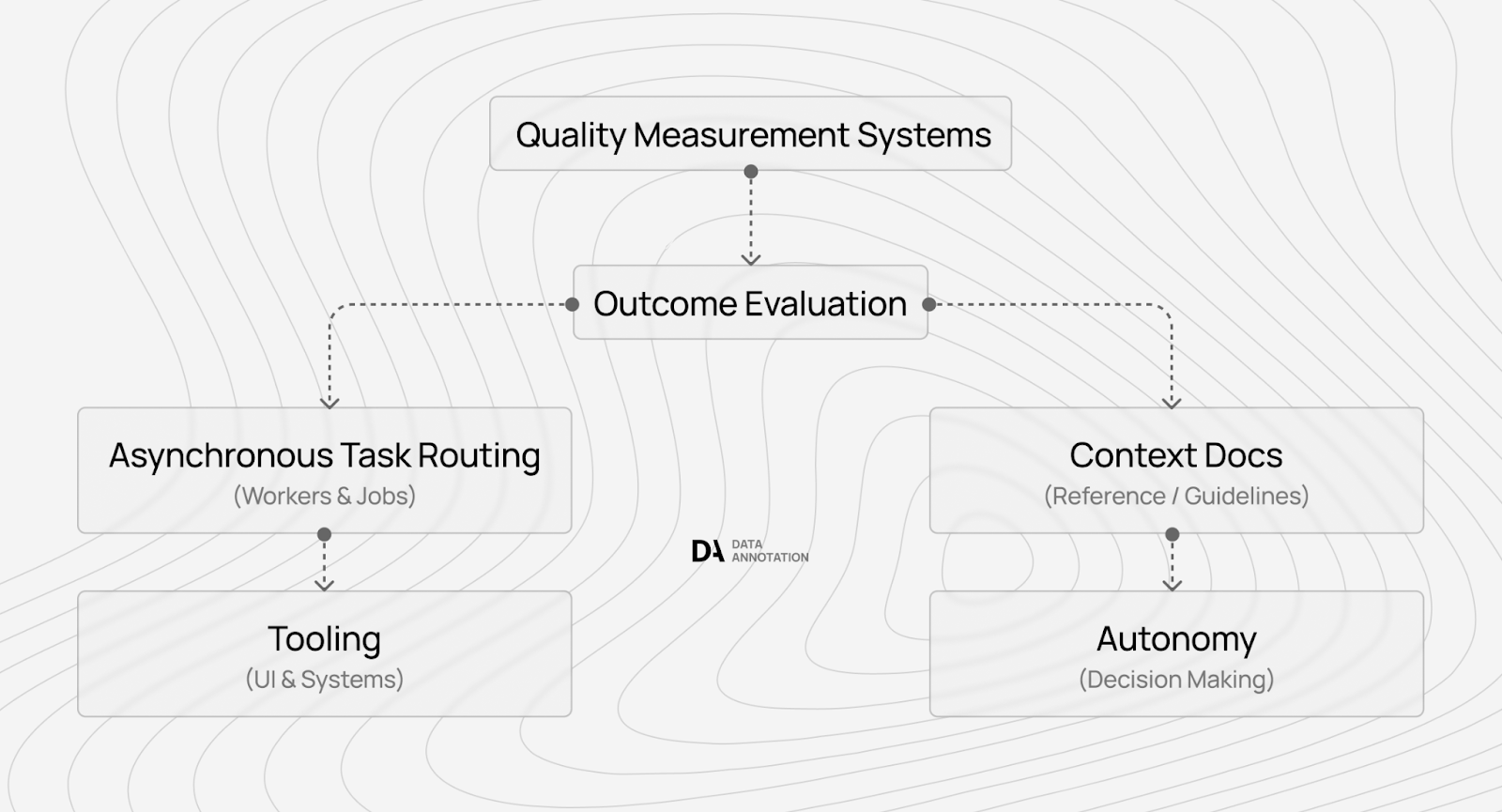
However, at DataAnnotation, we maintain selective standards because quality at the frontier scale requires genuine expertise, not just effort. If you're exploring AI training work because you heard it's easy money that anyone can do, we’re afraid, this isn't the right platform.
If you're looking to maximize hourly volume through minimal-effort clicking, there are commodity platforms better suited to that approach. If credentials matter more to you than demonstrated capability, our qualification process can discourage you.
Explore flexible coding projects at DataAnnotation
If you want to work where code quality determines frontier AI advancement and expertise compounds over time, DataAnnotation offers immediate access after a single qualification assessment.
If you want in, getting started is straightforward:
- Visit the DataAnnotation application page and click “Apply”
- Fill out the brief form with your background and availability
- Complete the Starter Assessment
- Check your inbox for the approval decision (which should arrive within a few days)
- Log in to your dashboard, choose your first project, and start earning
No signup fees. We stay selective to maintain quality standards. Just remember: you can only take the Starter Assessment once, so prepare thoroughly before starting.
Apply to DataAnnotation if you understand why quality beats volume in advancing frontier AI — and you have the expertise to contribute.
Frequently asked questions
So which one am I? Programmer, developer, or engineer?
Whichever one HR decided to put on your offer letter. The distinction matters for salary negotiations and LinkedIn searches. It predicts almost nothing about your ability to solve complex problems.
Should I "level up" from programmer to engineer?
If you want higher compensation at traditional companies, yes. The title inflation game rewards the progression. If you want meaningful technical work, the title matters far less than finding problems with high-quality ceilings and environments that value craft over credentials.
Does a CS degree make someone an engineer versus a programmer?
Formal training correlates with the "engineer" title but correlates weakly with actual engineering capability. We've seen bootcamp graduates out-architect CS PhDs. Education tells you what someone studied. It doesn't tell you whether they can think.
Which role is "best"?
The one where you're solving problems that require your genuine expertise, in an environment that measures quality rather than presence, doing work that actually matters. That has nothing to do with what HR calls you.
.jpeg)