
Imagine your manager pulls you into a 1:1. 'We want to promote you to principal engineer.' You've been a senior engineer for three years. You understand distributed systems, write clean code, and mentor your teammates. The title sounds like a natural progression.
Understanding the fundamental differences between principal and senior positions matters because these distinctions directly affect your negotiation leverage, career positioning, and the value you bring to any organization.
This guide breaks down concrete differences between these roles, details the day-to-day responsibilities and required expertise, and explains career trajectories from senior through principal and beyond.
7 key differences between a principal engineer and a senior engineer
The gap between Senior and Principal Engineer extends far beyond tenure. It encompasses the scope of impact, strategic ownership, and compensation that reflect these expanded responsibilities:
Strategic and tactical focus
Senior engineers translate product requirements into working systems. Your day starts with stand-ups, continues through feature implementation and code reviews, and ends with mentoring teammates through technical challenges. You own the execution quality of specific projects and ensure your team ships reliable software.
Principal engineers step back to shape the technical foundation that enables execution. You define platform standards, evaluate technology migrations that affect the entire company, and create architectural frameworks that determine what's even feasible to build.
A principal's success gets measured less by personal code output and more by how effectively entire teams build on the systems and standards they establish. The work involves writing occasional code, but your primary contribution lies in making architectural decisions that ripple across multiple quarters and teams.
Scope of influence and leadership
As a senior engineer, your decisions primarily affect your immediate team. When you architect a feature or establish a coding pattern, you're optimizing for the success of one project. That focused influence makes you valuable because teams depend on your execution quality and technical judgment.
Principal engineers influence across organizational boundaries. Your platform choices affect how five teams build features. Your performance standards shape how the entire engineering organization operates.
That expanded scope demands soft-power leadership: influencing without direct authority, aligning executive stakeholders on multi-million dollar technology investments, and mentoring other senior leaders who'll carry your architectural vision forward.
Career frameworks consistently emphasize these cross-functional leadership skills as the core differentiator between senior technical execution and principal-level strategic impact.
Experience and compensation expectations
The experience gap reflects the scope difference. Senior engineers typically have 5-10 years of experience building production systems, debugging complex issues, and mentoring teammates. You've shipped enough projects to recognize patterns and know where technical debt accumulates.
Principal engineers bring 10-15+ years of experience in architectural decision-making across diverse technology stacks and business contexts. You've seen migrations fail, platforms scale, and teams rebuild systems because initial architectural choices didn't account for growth. That pattern recognition justifies compensation higher than that of senior engineers.
Location and industry drive significant variance. For instance, a principal engineer in San Francisco's financial technology sector can earn different compensation than the same title in a midsize Midwest manufacturing company.
Company stage matters too. Early-stage startups may offer higher equity percentages but lower base salaries compared to established public companies with predictable cash compensation.
Skills and responsibilities
As a principal engineer, your day spans high-stakes decisions across diverse technical contexts. The role demands exceptional judgment combined with deep expertise:
- Organization-wide architectural ownership: Define patterns and standards that every team follows, steering long-term scalability and reliability, from database sharding strategies to microservices communication protocols
- Long-term technical roadmap creation: Translate business goals into multi-year engineering strategies, balancing innovation against risk while accounting for technical debt and resource constraints
- Mentoring senior engineers and informing executive leadership: Coach experienced technical leaders while providing CTO-level guidance on technology investments, trade-offs, and risk assessment that non-technical executives can act upon
As a senior engineer, your work balances hands-on development with team leadership:
- Owning major features or system modules: Maintaining full accountability for quality, performance, and reliability while coordinating with product managers and other teams
- Driving rigorous code reviews and best-practice enforcement: Keeping technical debt manageable through consistent standards and proactive refactoring.
- Mentoring junior and mid-level engineers: Pairing on complex problems, reviewing architectural proposals, and modeling professional engineering practices that elevate team capabilities
- Writing or reviewing technical design documents: Communicating decisions clearly to both engineers and non-technical stakeholders, capturing rationale for future reference
Senior engineers sit above mid-level developers and just below staff levels on most engineering ladders.
Career path
Reaching a principal engineer role typically requires 10-15 years of demonstrated technical engineering, leadership and strategic impact, but it's not the ceiling.
Several advancement paths emerge from here:
- Distinguished Engineer or Fellow: Stay on the individual-contributor track while gaining industry-wide recognition for technical thought leadership and innovation that extends beyond your company
- Director or VP of Engineering: Pivot into formal people leadership where your strategic architectural thinking aligns naturally with executive management responsibilities
- CTO roles at startups: Apply broad architectural insight to set technology direction from day one at companies where technical decisions determine business viability
As a senior engineer, several advancement paths open depending on whether you prefer deepening technical mastery or moving toward people leadership:
- Principal engineer or staff engineer: Staying on the individual-contributor track to shape architecture and technical direction at an organizational scale
- Engineering manager: Trading direct code ownership for responsibility over people development, hiring, team dynamics, and delivery processes
- Specialist leads in security or site reliability: Focusing on niche expertise that requires deep domain knowledge and influences multiple teams.
Excelling as a senior engineer means multiplying your impact. The code you write solves immediate problems, while your guidance and mentorship ensure your team solves future problems more effectively.
Beyond daily engineering: how your technical expertise makes you valuable to AGI development
The distinction between senior and principal engineers (between executing within boundaries and setting those boundaries) matters beyond traditional engineering roles.
Companies building frontier AI systems need both types of judgment. They need engineers who can evaluate whether the generated code handles edge cases correctly at the implementation level. They also need engineers who can assess whether AI-generated architectural recommendations are organizationally feasible, not just technically sound.
Consider what happens when AI tools suggest technical solutions:
A coding assistant generates a database migration script. The syntax is correct. The logic handles the immediate use case.
However, there are some questions:
- Will it work at production scale?
- Does it account for concurrent access patterns?
- Will it create locking issues under load?
This requires the judgment at the execution level that senior engineers develop through hands-on implementation.
That same AI tool also recommends breaking a monolith into microservices. The architecture is technically elegant. The service boundaries make sense on paper.
Some questions also arise:
- Does the proposal account for the coordination tax?
- Can the organization actually execute this migration, given current team structures and priorities?
- Does it consider the operational complexity of running distributed systems?
This requires the organizational judgment that principal engineers develop through driving cross-team initiatives.
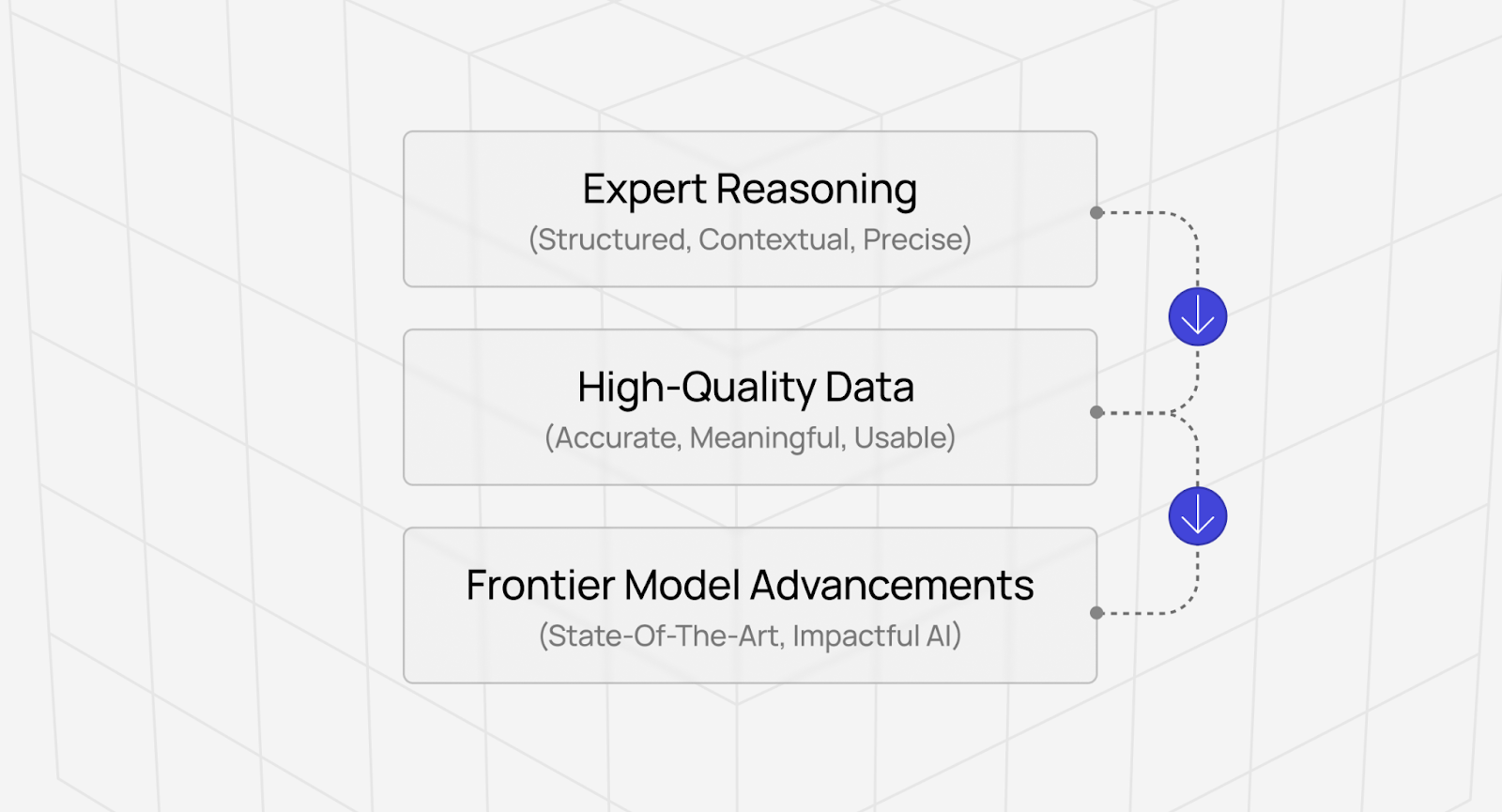
Both types of expertise shape what AI systems learn about software engineering — not just how to write correct code, but also how to make technical decisions that remain coherent across organizational handoffs and are implemented in real companies.
How to get an AI training job?
At DataAnnotation, we operate one of the world’s largest AI training marketplaces with over 100,000 AI trainers working remotely. To source AI trainers, we operate a tiered qualification system that validates expertise and rewards demonstrated performance.

Entry starts with a Starter Assessment that typically takes about an hour to complete. This isn't a resume screen or a credential check — it's a performance-based evaluation that assesses your ability to do the work.
Pass it, and coding projects start at $40 per hour for code evaluation and AI performance assessment across Python, JavaScript, HTML, C++, C#, SQL, and other languages.
You can choose your work hours. You can work daily, weekly, or whenever projects fit your schedule. There are no minimum hour requirements, no mandatory login schedules, and no penalties for taking time away when other priorities demand attention.
The work here at DataAnnotation fits your life rather than controlling it.
Contribute to AGI development at DataAnnotation today
If you want to work where code quality determines frontier AI advancement and expertise compounds over time, DataAnnotation offers immediate access after a single qualification assessment.
The gap between models that just pass benchmarks and those that work in production lies in the quality of the training data. If your background includes technical expertise or the critical thinking to spot what automated systems miss, AI training at DataAnnotation positions you at the frontier of AGI development.
Not as a button-clicker earning side income, but as someone whose judgment determines whether billion-dollar training runs advance capabilities or learn to optimize the wrong objectives.
This work shapes systems that millions of people will interact with.
Getting from interested to earning takes five straightforward steps:
- Visit the DataAnnotation application page and click “Apply”
- Fill out the brief form with your background and availability
- Complete the Starter Assessment, which tests your critical thinking and attention to detail
- Check your inbox for the approval decision (which should arrive within a few days)
- Log in to your dashboard, choose your first project, and start earning
No signup fees. We stay selective to maintain quality standards. Just remember: you can only take the Starter Assessment once, so prepare thoroughly before starting.
Apply to DataAnnotation if you understand why quality beats volume in advancing frontier AI — and you have the expertise to contribute.
.jpeg)