
Scroll through most tech job boards, and the title confusion hits immediately. One company can ask for a "rock-star coder," whereas they actually need a “programmer” or a “developer”.
Many companies use these labels interchangeably, even though each role has distinct scope and skill requirements. Apply for the wrong title, and the mismatch becomes obvious during the interview. Either the work feels too simple, or the architecture discussions go over your head.
This guide explains what actually separates coders, programmers, developers, and software engineers — and why those distinctions matter more now than ever.
Coder vs. programmer vs. developer vs. software engineer at a glance
These titles represent distinct levels of scope and responsibility in software creation. While all involve writing code, the breadth of work, system-level thinking, and collaboration requirements differ significantly:
Scope of work and technical ownership
Coders implement specific tasks based on detailed instructions. Someone hands you precise requirements, like “build a function that validates email addresses,” and you translate them into working code. No architectural decisions, no system design, just clean implementation.
Programmers own complete modules within established systems. This means building an entire user authentication system: choosing between bcrypt and Argon2 for password hashing, designing session management logic, and handling edge cases such as expired tokens. Programmers make these implementation choices within an architecture designed by someone else.
Developers build complete applications end-to-end. The entire application is their domain: React or Vue for the frontend, Node.js or Django for the backend, PostgreSQL or MongoDB for data storage. Developers decide how these pieces connect and ensure the complete product works.
Software engineers design system-wide architectures. Instead of building one application, engineers determine how five different services communicate: API versioning strategies, message queue architectures, and database sharding approaches. These decisions affect every team in the engineering organization.
Problem-solving level and decision-making authority
Coders execute well-defined tasks. The problem is already solved; you just need to implement the solution using correct syntax and logic. Your questions focus on "How do I write this in Python?" rather than "Should we use this approach?"
Programmers solve defined technical problems. The problem is clear — "make the search feature faster" — but programmers choose the solution: add database indexes, implement caching, or switch to a different search algorithm. Someone else defined the problem, but implementation decisions are yours.
Developers create solutions to product requirements. The product team says, "users need to share documents." Developers decide: real-time collaborative editing like Google Docs, or simple file attachments?
You also choose how features should work, what trade-offs to make between complexity and user experience, and how to balance shipping quickly against code quality.
Software engineers design frameworks for entire classes of problems. Instead of solving one sharing problem, engineers build a permissions system that handles sharing, privacy, and access control across every product feature. They create the infrastructure that solves entire categories of problems at once.
Core responsibilities
Coders handle implementation work that requires technical precision. Examples include:
- Write clean, functional code: Translate specifications into working scripts or functions in Python, JavaScript, or Java. Focus on syntax accuracy and meeting exact requirements.
- Debug and test individual components: Identify errors through testing. Fix bugs until your work passes predefined tests without affecting other system parts.
Programmers take ownership of complete features while working within frameworks set by senior team members:
- Design efficient algorithms and data structures: Choose optimal approaches for speed and memory usage. Consider edge cases and performance implications of your implementation choices.
- Write and maintain unit tests: Create comprehensive tests for your code. Ensure new changes don't break existing functionality through systematic testing approaches.
For developers, they own complete application features and make decisions about how systems should work:
- Build full-stack applications: Create both user interfaces and server-side logic. Connect frontend components to backend APIs and databases to deliver complete functionality.
- Deploy and maintain applications: Handle deployment pipelines, monitor production systems, and fix issues that arise after launch. Take responsibility for your application's uptime and performance.
For software engineers, they design systems that scale and coordinate technical decisions across multiple teams:
- Design system-wide architectures: Map out how services interact across your entire platform. Make decisions about databases, communication patterns, and infrastructure that support business goals.
- Plan for scale and reliability: Build systems that handle growth without rewriting core infrastructure. Design for failure, implement monitoring, and establish incident response procedures.
Collaboration and cross-functional interaction
Coders work mostly alone or in pairs. Code gets assigned, you write it, and senior developers review it. You won’t spend much time in meetings; instead, you'll mostly be doing heads-down implementation work.
Programmers collaborate within development teams. You participate in daily standups, code reviews, and discussions with your teammates about implementation approaches. Programmers coordinate with other programmers, but conversations rarely leave the engineering team.
Developers work across product and design teams. You’ll spend time in meetings on requirements review with product, design critique with designers, or explaining why "just add AI" takes three months.
Developers must constantly translate between technical and business languages, so your communication skills matter just as much as your coding knowledge. Software engineers lead technical initiatives across multiple teams. You coordinate across product, design, security, infrastructure, and business teams.
Beyond code syntax: why judgment compounds while implementation commoditizes
Five years ago, the mark of a productive code merchant was implementation velocity. Write features fast, ship constantly, measure output in pull requests per week. Speed was the skill that mattered.
That model is breaking down.
85% of developers now regularly use AI tools for coding and development, and 62% rely on at least one AI coding assistant, agent, or code editor. Implementation speed is becoming commoditized. Technical discernment isn't.
The implementation bottleneck is dissolving
For decades, the constraint in software development was simple: not enough people who could translate requirements into working code. Companies hired based on coding speed because execution was a scarce resource.
AI didn't just make developers faster — it removed implementation as the primary constraint.
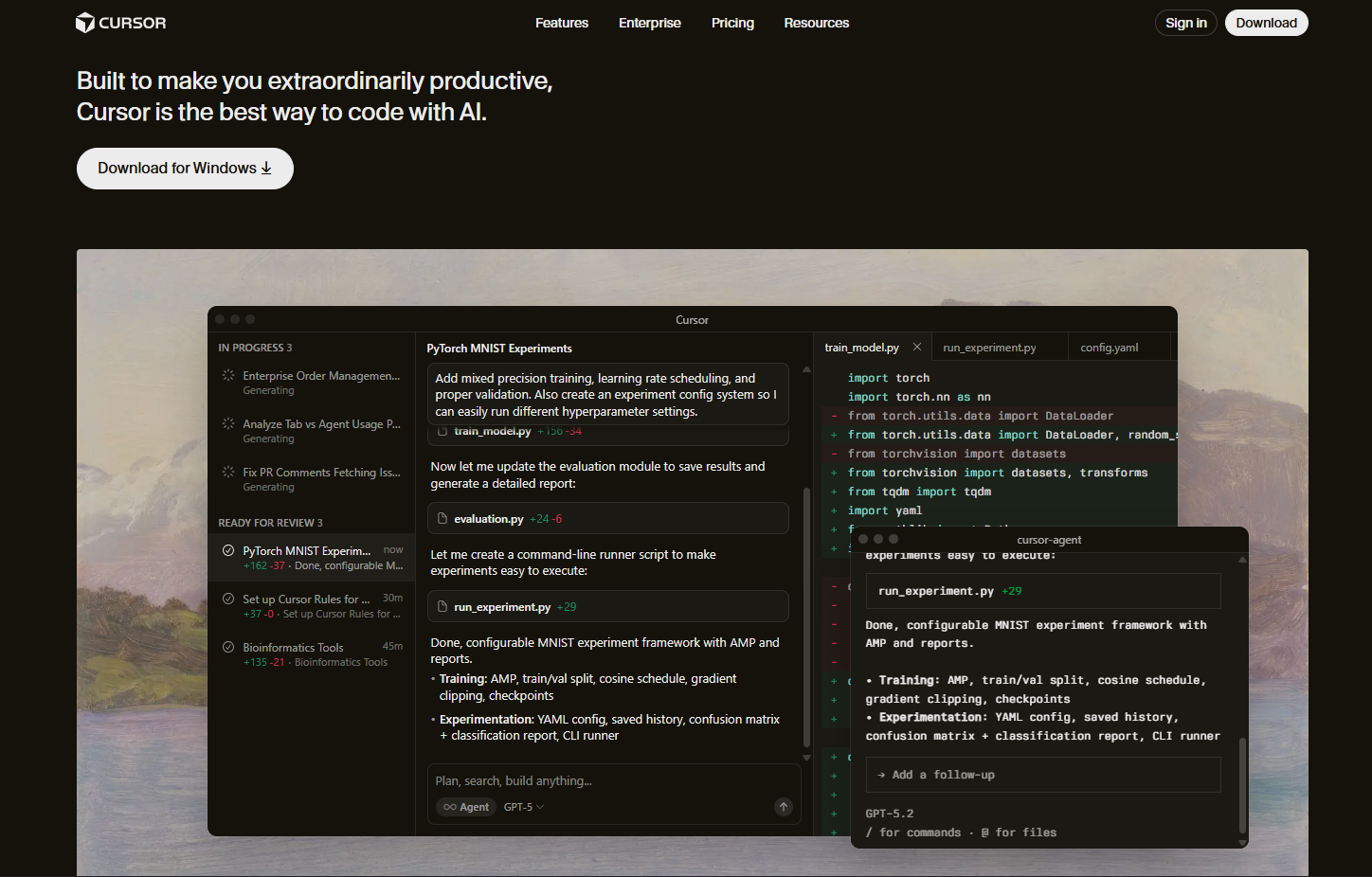
A junior developer with Cursor or GitHub Copilot can now generate boilerplate, wire up APIs, and scaffold complete features in hours instead of days.
The code compiles. The tests pass. The feature works.
But "works" and "good" are different problems.
The generated authentication system might store passwords correctly, but use weak hashing. The API endpoint handles the happy path but crashes on malformed requests. The database queries work with 100 users but create N+1 problems at scale.
These aren't bugs the AI can see. They're judgment failures that only surface through experience — through having shipped code that failed in production, maintained systems that aged poorly, or debugged incidents caused by "clever" solutions that seemed elegant at the time.
Why taste in code beats speed at implementation
Technical taste is an accumulated judgment about what makes code good beyond correctness.
You develop it by:
- Shipping code and maintaining it months later when requirements change
- Debugging production issues caused by abstractions that seemed clean but created coupling problems
- Working on enough systems to recognize which patterns succeed and which become technical debt
- Code reviewing hundreds of pull requests and articulating why functionally equivalent implementations differ in quality
AI models don't have taste yet. They can't explain why experienced developers grimace at specific code patterns that technically work. They can't anticipate which architectures will age well and which will feel brittle when the next feature request arrives.
Consider three implementations of the same feature — all correct, all passing tests:
Implementation A uses inheritance hierarchies that feel object-oriented but create rigid coupling between components. Adding the next feature requires touching six different files.
Implementation B abstracts everything into generic interfaces "for flexibility." The code is more complex to understand, and the imagined future use cases never materialize.
Implementation C solves the immediate problem simply, uses composition over inheritance, and makes one extension point obvious for the likely next requirement.
All three work. Only the third demonstrates taste — understanding not just how to solve the problem, but how the solution fits into the system's evolution over time.
Where judgment actually compounds in your work
Technical judgment isn't a separate activity you do occasionally. It's the core of what makes experienced developers valuable now. Implementation is table stakes. Judgment is what separates skill levels.
Code review: evaluating beyond correctness
You don't just verify the code works. You evaluate:
- Whether it's maintainable six months from now, when someone unfamiliar with the context needs to modify it
- Whether it follows team patterns or introduces inconsistency that fragments the codebase
- Whether it handles edge cases gracefully or assumes happy-path execution
- Whether it's the right abstraction for the problem space or a premature generalization
These assessments require pattern recognition across past failures—knowing which "clean" solutions created maintenance nightmares, which shortcuts proved surprisingly durable, and which abstractions aligned with how the system actually evolved.
Architecture discussions: choosing between working approaches
Multiple approaches could work. The questions that matter:
- Which creates the fewest headaches in the future when requirements inevitably change?
- Which scales most naturally as usage grows?
- Which best serves unknown future requirements without over-engineering?
- Which aligns with how the team thinks about the system?
These aren't questions you answer through analysis alone. They require intuition built from seeing how different architectural choices played out across multiple projects — which seemed elegant but created coupling problems, which felt simple but scaled cleanly, and which abstractions aged well versus which needed rewrites.
Mentoring: articulating implicit knowledge
You can't enumerate all the rules that make code good. Instead, you point at examples:
"This works, but here's why we don't do it this way—six months from now, when we need to add feature X, this pattern makes it painful."
"See how this function does three different things? It works today, but when one of those responsibilities needs to change, you'll touch code that shouldn't care about that change."
"Yes, the abstraction is elegant. But we don't actually have two different implementations of this interface, and we probably never will. You're paying the cost of abstraction without getting the benefit."
This is judgment, not process documentation. It's the accumulated pattern recognition that lets you see how today's code decisions create tomorrow's maintenance burden or flexibility.
What this means for your career trajectory
The developers who remain valuable aren't those who type fastest. They're the ones who can:
- Look at three different working implementations and articulate why one creates coupling problems, another violates principles of least surprise, and the third (while less elegant) better serves actual usage patterns
- Recognize when a "quick fix" will create technical debt worth avoiding versus when it's the pragmatic choice
- Push back on product requirements that would create architectural nightmares, not because they're hard to implement, but because they'd make the system fundamentally harder to reason about
This shift was already happening before AI code generation. Now it's accelerating.
If your value proposition is "I can implement features quickly," you're competing with tools that implement even faster.
If your value proposition is "I know which features we shouldn't build, which abstractions serve future needs, and when to push back on requirements that would create technical nightmares," you're doing work AI can't yet replicate.
The question isn't whether AI will replace developers. The question is whether you're developing judgment that compounds over time, or just implementation skills that are being commoditized.
How AI training provides an alternative for coders, programmers, developers and software engineers
At this point, almost every coder has encountered AI-generated code. You've probably used it to write boilerplate, debug issues, or explore unfamiliar libraries. The code works sometimes. Other times, it confidently produces solutions that fail in subtle ways.
That gap between "code that compiles" and "code you'd actually ship"? Companies will pay you to evaluate it.
Models improve by learning from developers and engineers who can articulate that gap — who can explain not just that generated code is wrong, but why it's wrong and what would make it better.
This isn't about job security or protecting your role from automation. It's about actively shaping what AI coding tools become capable of. The professionals evaluating AI-generated code today directly influence what models can build tomorrow.
How to get an AI training job?
At DataAnnotation, we operate one of the world’s largest AI training marketplaces with over 100,000 AI trainers working remotely. To source AI trainers, we operate a tiered qualification system that validates expertise and rewards demonstrated performance.

Entry starts with a Starter Assessment that typically takes about an hour to complete. This isn't a resume screen or a credential check — it's a performance-based evaluation that assesses your ability to do the work.
Pass it, and coding projects start at $40 per hour for code evaluation and AI performance assessment across Python, JavaScript, HTML, C++, C#, SQL, and other languages.
You can choose your work hours. You can work daily, weekly, or whenever projects fit your schedule. There are no minimum hour requirements, no mandatory login schedules, and no penalties for taking time away when other priorities demand attention.
The work here at DataAnnotation fits your life rather than controlling it.
Explore premium coding projects at DataAnnotation
If you want to work where code quality determines frontier AI advancement, at DataAnnotation, we‘re at the forefront of AGI development, where your judgment determines whether billion-dollar training runs advance capabilities or optimize for the wrong objectives.
When you evaluate AI-generated code, your preference judgments influence how models balance helpfulness against truthfulness, how they handle ambiguous requests, and whether they develop reasoning capabilities that generalize or just memorize patterns.
This work shapes systems that millions of people will interact with.
If you want in, getting started is straightforward:
- Visit the DataAnnotation application page and click “Apply”
- Fill out the brief form with your background and availability
- Complete the Starter Assessment
- Check your inbox for the approval decision (which should arrive within a few days)
- Log in to your dashboard, choose your first project, and start earning
No signup fees. We stay selective to maintain quality standards. Just remember: you can only take the Starter Assessment once, so prepare thoroughly before starting.
Apply to DataAnnotation if you understand why quality beats volume in advancing frontier AI — and you have the expertise to contribute.
.jpeg)