Train AI on Coding Reasoning.
The models shaping the future of AI are only as rigorous as the coders behind them. Apply your expertise where it matters, and get paid to do it.



Kevin

As seen on







This is not busywork.
The most advanced code generation models still produce race conditions, ignore edge cases, hallucinate APIs, and write O(n³) solutions when linear time is trivial. You're the engineering filter that catches what compilers can't — one annotation at a time.
Three steps.
No overhead.
Apply & Qualify
Complete a short engineering assessment. We evaluate your ability to identify correctness bugs, reason about complexity, and write clean, idiomatic code. No résumé required — your code speaks.
Get Matched
Based on your stack and assessment results, you're matched to projects in your areas of expertise. Systems programming, web backends, ML pipelines, mobile, infra — you choose what fits your background.
Work & Get Paid
Complete tasks on your own schedule. Each task has clear specifications, test cases, and a defined scope. Payment is per-task, processed weekly, starting at $40/hour.
What you'll actually do.
Write a prompt
Craft precise engineering prompts designed to probe the boundaries of model reasoning — not toy problems, but challenges that expose incorrect algorithms, unsafe memory access, and flawed system design decisions.
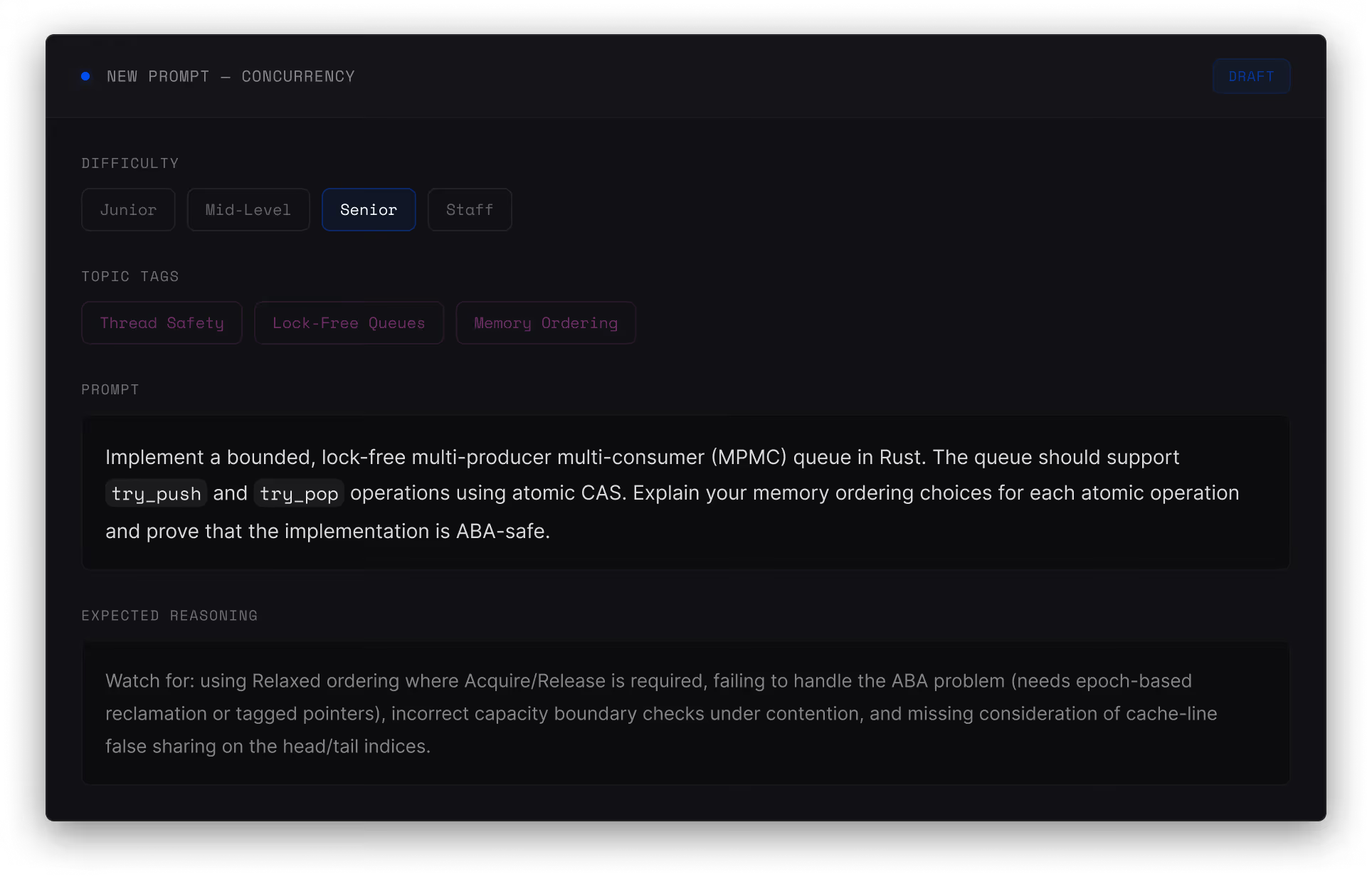
Review AI output
Evaluate whether the model's code actually works — catching off-by-one errors in loop logic, identifying race conditions in concurrent implementations, and flagging O(n²) solutions where a more efficient algorithm was straightforward.
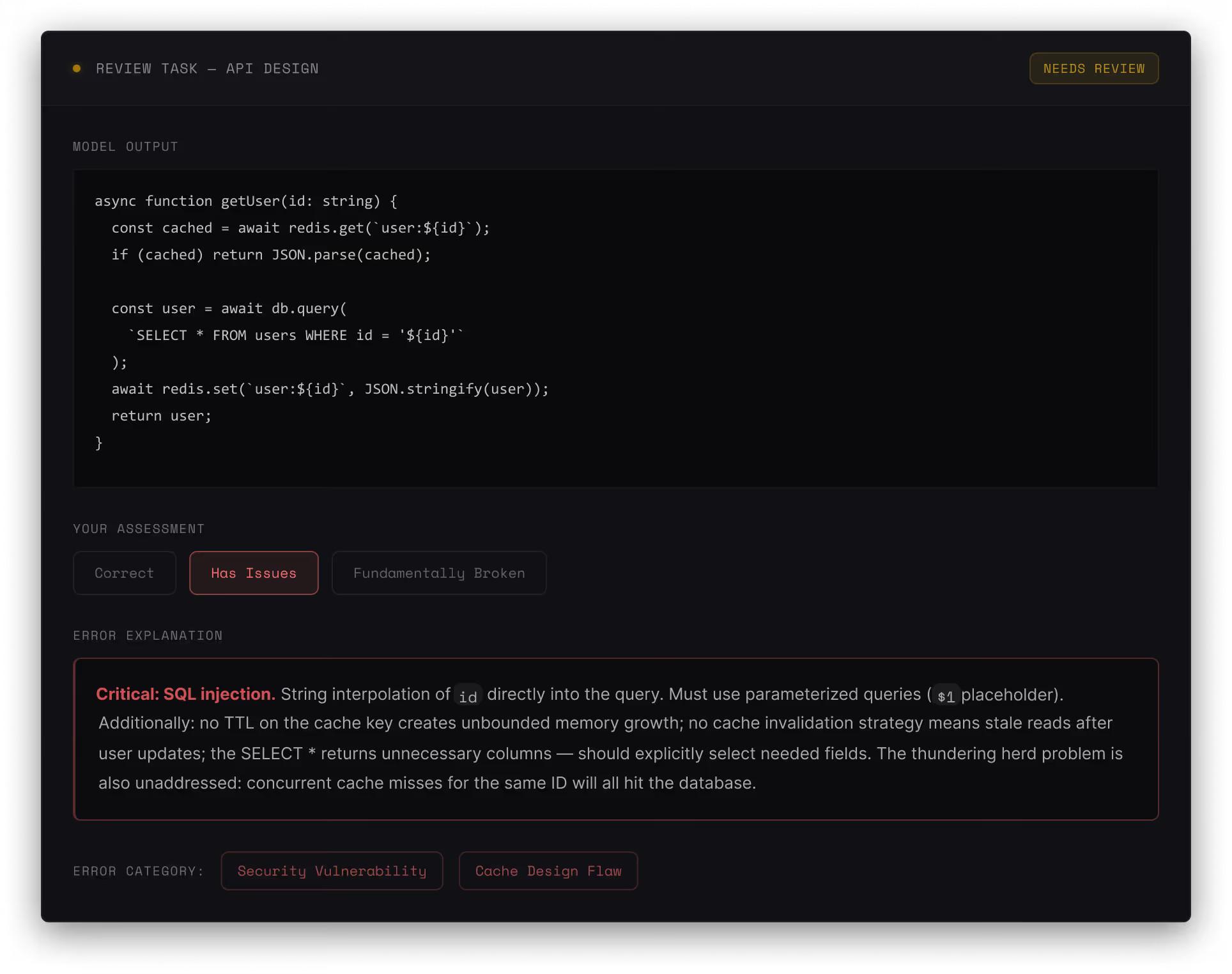
Write the correct solution
Author a complete, production-quality implementation that demonstrates the correct approach. This becomes training signal for the next model generation.
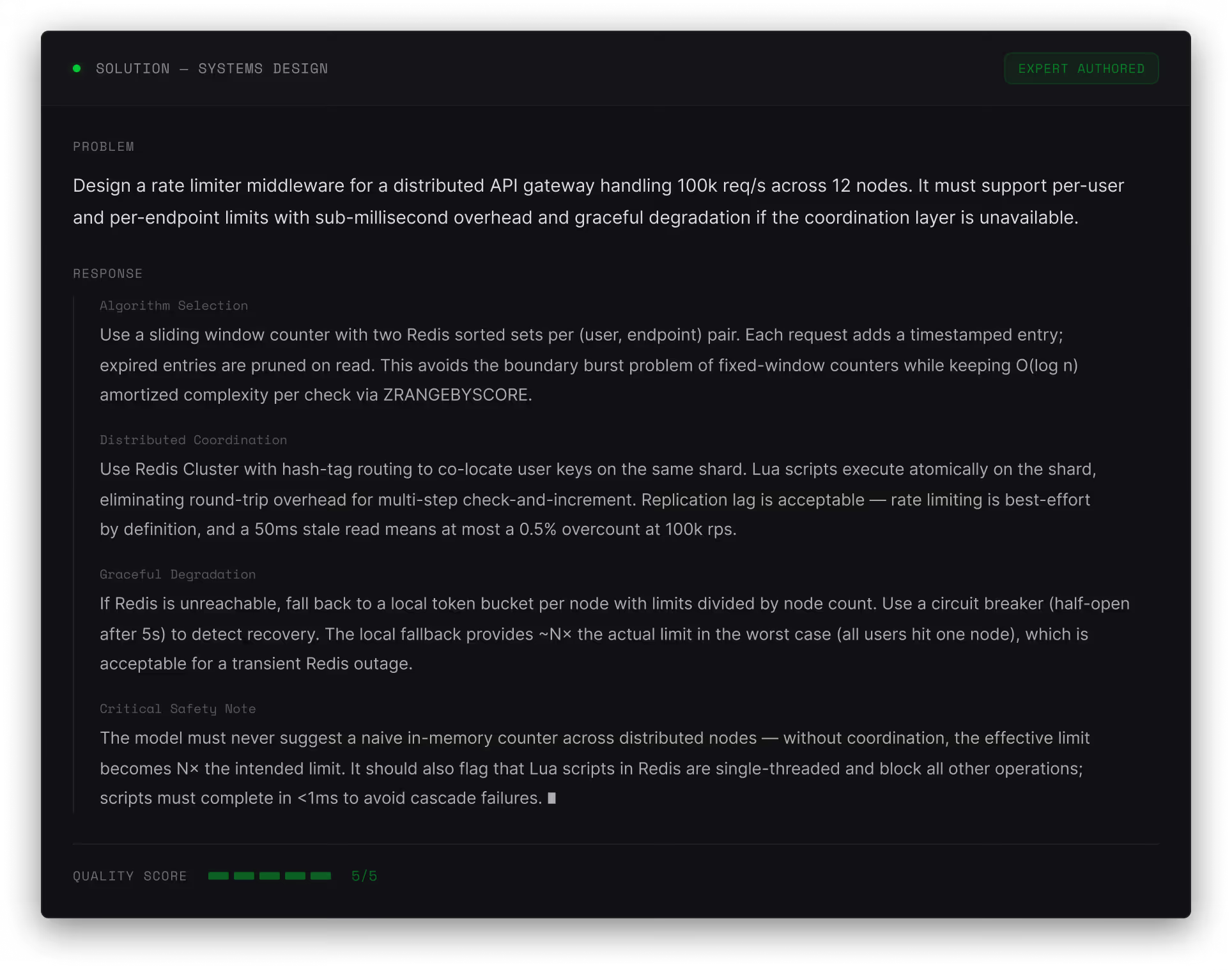
Where models need you most.
These are the engineering domains where current AI code generation consistently produces dangerous output. Your expertise directly addresses the hardest open problems in coding AI.
Systems & Infrastructure
Evaluate AI reasoning about distributed systems, networking, operating systems, and infrastructure design. Verify claims about consensus protocols, storage engines, and scalability trade-offs.
Algorithms & Data Structures
Review model outputs on algorithm design, complexity analysis, and data structure selection. Catch incorrect Big-O claims, flawed dynamic programming formulations, and suboptimal data structure choices.
Security & Cryptography
Assess AI-generated code for security vulnerabilities, cryptographic misuse, and authentication flaws. Identify injection vectors, broken crypto implementations, and authorization bypass patterns.
Backend & API Design
Evaluate reasoning about API architecture, database design, caching strategies, and service communication. Identify N+1 queries, incorrect transaction isolation levels, and flawed idempotency implementations.
Frontend & Performance
Review model outputs on frontend architecture, rendering performance, state management, and accessibility. Verify claims about bundle optimization, hydration strategies, and browser API usage.
Research-grade standards.
We require excellence, just as you would require in peer review. The researchers and academics on our platform aren’t here to tick boxes. They’re here because the quality standard matters to them.
.png)
“This is evaluation by people who understand system behavior and edge cases. The focus is always on improving model reliability.”
Daniel
Research Engineer

.png)
“Every decision is grounded in first-principles reasoning. The standards are comparable to what I’ve seen in academic and industrial research.”
Anita
Applied Scientist

.png)
“This is annotation done by people who understand models, not just labels. The quality bar is high and enforced.”
Elena
Senior ML Engineer

.png)
“The work demands subject-matter expertise. Decisions are justified, reviewed, and aligned to well-defined taxonomies.”
Stephen
Research Scientist

Coding tasks completed weekly
Active developer contributors
Tech companies represented
Built for people who think in systems.
CS Students
Upper-division and graduate CS students with strong foundations in algorithms, systems, and software engineering principles.
Software Engineers
Professional developers with production experience looking for flexible, intellectually demanding work outside their day jobs.
Staff & Principal Eng.
Senior engineers applying deep systems knowledge and architectural expertise to AI training data on their own schedule.
Open-Source Contributors
Maintainers and active contributors with demonstrated ability to write clean, well-tested, production-quality code.
Frequently Asked Questions
Have questions? Here we answer the most common questions.
You’ll work on tasks that help AI perform better—like reviewing responses, checking accuracy, refining prompts, and rating outputs. No coding or technical background needed.
You’ll work on projects that improve AI systems, such as reviewing responses, checking accuracy, refining prompts, ranking outputs, and validating model behavior.
Projects include data labeling, annotation, evaluation, and quality review across text, images, and structured tasks—focused on improving real production AI systems.
This is ideal for people with strong reasoning skills, attention to detail, and subject-matter expertise who want flexible, remote work with real impact.
This is a flexible, task-based contractor role. There is no long-term commitment required, and you can work as much or as little as you choose.
Available projects vary but commonly include prompt evaluation, response ranking, factual accuracy checks, domain-specific review, and structured annotation tasks.
Researchers, students, professionals, and independent contributors who enjoy analytical work and want to contribute to advancing AI systems.
This is remote, asynchronous work focused on output quality rather than hours logged. Performance is evaluated based on contribution quality and consistency.
Get ahead in a changing workforce.
No recruiters. No interviews. Just meaningful work and real compensation.